[Part 18]
[Benton Bradberry’s 2012 book, “The Myth of German Villainy” is a superb, must-read, revisionist look at how the German people have been systematically, relentlessly and most importantly, unjustly vilified as the arch criminal of the 20th century. Bradberry sets out, coolly and calmly as befits a former US-Navy officer and pilot, to show why and how the German people have been falsely accused of massive crimes and that their chief accuser and tormentor, organized jewry is in fact the real party guilty of monstrous crimes against Germans and the rest of the world.
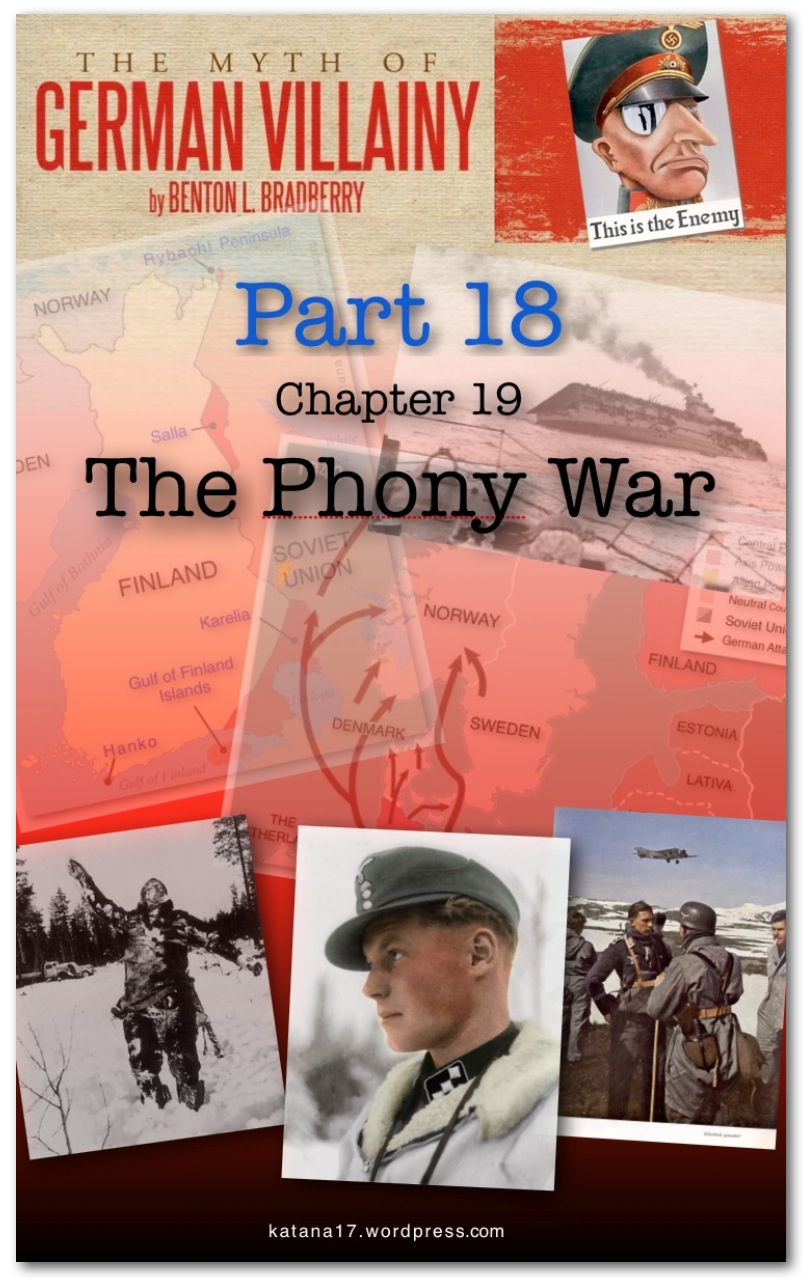
In Part 18, the period between September 1939 and April 1940, known in America as the Phony War, in Britain as the Twilight War, and in Germany as the Sitzkrieg is discussed, with emphasis on the Russo-Finnish War, the German Norway/Denmark Campaign, the German invasion of Denmark and Norway, and Churchill replacing Chamberlain as Prime Minister.
Churchill, as First Lord of the Admiralty, unilaterally took it upon himself to order the mining of Norwegian coastal waters for the purpose of blocking German iron ore shipments. This was a flagrant violation of Norway’s neutrality, and it posed an intolerable threat to Germany. Germany reacted quickly by invading Denmark to facilitate the invasion of Norway. With the help of the German sympathizer Vidkun Quisling, head of the Norwegian National Socialist Party, the Norwegian armed forces stopped resisting the Germans and soon Norway was occupied by Germans and the subsequent British invasion was repelled.
Churchill’s failure in Norway was then used by the pro-war faction to replace Chamberlain with Churchill as the Prime Minister — KATANA.]
NOTE: The author has very generously given me permission to reproduce the material here — KATANA.
The book can be bought at Amazon here: The Myth of German Villainy
The Myth of
German Villainy
by
Benton L. Bradberry
Contents
[Clicking on a link in the Contents here will take you to that Part, in a separate post]
[Part 01]
Preface
Chapter 1 – The Myth of Germany as an Evil Nation
Germany’s Positive Image Changes Overnight
[Part 02]
Chapter 2 – Aftermath of the War in Germany
The Versailles Treaty
Effect of the Treaty on the German Economy
Was the War Guilt Clause Fair?
Did Germany Really Start the War?
[Part 03]
Chapter 3 – The Jewish Factor in the War
Jews at the Paris Peace Conference
Jews in Britain
[Part 04]
Chapter 4 – The Russian Revolution of 1917
Bolsheviks Take Control
Jews and the Russian Revolution
Origin of East European Jews
Reason for the Russian Pogroms Against the Jews
Jews Leave Russia for America
Financing the 1917 Revolution
Jews in the Government of Bolshevik Russia
[Part 05]
Chapter 5 – The Red Terror
Creation of the Gulag
Bolsheviks Kill the Czar
Jews as a Hostile Elite
The Ukrainian Famine (Holodomor)
[Part 06]
Chapter 6 – The Bolshevik Revolution Spreads Throughout Europe
Jews in the Hungarian Revolution
Miklos Horthy Saves Hungary
Jews in the German Revolution
The Spartacist Uprising in Berlin
Jewish Bolsheviks Attempt to Take Italy
Jewish Bolsheviks Attempt to Take Spain — The Spanish Civil War
Czechoslovakia in Danger of Communist Takeover
The Comintern’s Aim? World Domination!
[Part 07]
Chapter 7 – The Nation of Israel
History of the Expulsion of Jews
[Part 08]
Chapter 8 – Jews in Weimar Germany
Jews Undermine German Culture
[Part 09]
Chapter 9 – Hitler & National Socialists Rise to Power
The 25 Points of the National Socialist Party
[Part 10]
Chapter 10 – National Socialism vs. Communism
National Socialism
Jews Plan Marxist Utopia
[Part 11]
Chapter 11 – Jews Declare War on Nazi Germany
Text of Untermeyer’s Speech in New York
The Jewish Persecution Myth
Effect of Boycott on the German Economy
Jewish Exaggerations are Contradicted by Many
[Part 12]
Chapter 12 – The Nazis and the Zionists Actually Work Together for Jewish Emigration out of Germany
The Nuremberg Laws – 1935
The Zionist Movement
[Part 13]
Chapter 13 – Life in Germany Under Hitler
Night of the Long Knives
1934 Annual Nazi Rally at Nuremberg
Hitler Revives the German Economy
Hitler Becomes the Most Popular Leader in the World
[Part 14]
Chapter 14 – Hitler Begins Reclamation of German Territory
Chapter 15 – The 1936 Olympics
[Part 15]
Chapter 16 – “Anschluss”. The Unification of Austria and Germany
Austrian Economy Revived
Austria’s Jews
[Part 16]
Chapter 17 – Germany Annexes the Sudetenland
[Part 17]
Chapter 18 – War with Poland
The Polish Problem
Hitler’s Proposal to Poland
Kristallnacht
German-Polish Talks Continue
Jews Influence both Roosevelt and Churchill
British and American Political Leaders Under Jewish Influence
Roosevelt’s Contribution to Hostilities
Lord Halifax Beats the War Drums
Germany Occupies Bohemia and Moravia
Roosevelt Pushes for War
Anti-war Movement Becomes Active
Poles Murder German Nationals Within the Corridor
[Part 18]
Chapter 19 – The Phony War
Russo-Finnish War
The Norway/Denmark Campaign
German Invasion of Denmark and Norway
Churchill Takes Chamberlain’s Place as Prime Minister
[Part 19]
Chapter 20 – Germany invades France Through the Low Countries
The Phony War Ends.
Churchill the War Lover
The Fall of France
Hitler Makes Peace Offer to Britain
[Part 20]
Chapter 21 – The Allied Goal? Destruction of Germany!
[Part 21]
Chapter 22 – Germany as Victim
Rape and Slaughter
Jewish Vengeance
The Jewish Brigade
[Part 22]
Chapter 23 – Winners and Losers
Bibliography
Chapter 19
The Phony War
Hitler was convinced that the future of Western civilization depended on the close cooperation of Germany with other European states, but particularly with her Aryan cousins, Britain and America. To Hitler, the big existential threat to Western civilization was Communist Russia, which he regarded as the base of Jewish world ambitions. He came to this conclusion as a young man when he first became interested in politics. He watched as the Bolshevik Jews took control of Russia and then launched their Red Terror. He watched as Jewish-led Communist revolutions sprang up all over Europe, which were organized and funded by the Comintern based in Russia, and backed by international Jewish banks. He came to power in Germany as an anti-Communist, and saw it as his life’s mission to fight Communism and to raise Germany up as a bulwark against the tidal wave of Jewish Communism which threatened to sweep over Christian Europe. He made every attempt to forge alliances with Britain and to have good relations with the United States, and was dismayed that his overtures were spurned at every turn. He was distressed and saddened that the threat to Western civilization posed by Communist Russia was not as obvious to the leaders of Britain and the United States as it was to him.
Hitler saw it as inevitable that Germany would eventually end up in a war with Communist Russia. It was only a matter of when, not whether. Soviet leaders were of the same mind. Hitler was convinced that Communist Russia would invade Europe, Germany first, at some time in the not too distant future whenever the Soviets felt strong enough to do so. When that day came, what he wanted more than anything was to avoid another two front war. Hitler had every interest from that standpoint alone in establishing and maintaining friendly relations with the other Western powers, particularly with Britain and the United States, in order to avoid any such likelihood. But he also wanted good relations with the other European nations because he believed that they each, like Germany, were an integral part of Western Christian Civilization, under siege by atheistic Jewish Bolshevism. The last thing Hitler wanted was a war with Britain and France. Pulitzer Prize winning author Louis Kilzer confirms this in his book, “Churchill’s Deception” – Simon & Schuster, (1994):
“‘Hitler did not want a world war, and had no stomach for fighting England,’ he wrote. But powerful forces in Britain and France wanted a war with Germany.”
Though Britain and France were in no position to intervene in Poland, they wasted no time in initiating military actions against Germany. The very next day after Britain and France declared war on Germany (September 3, 1939), RAF bombers bombed German warships in the Helgoland Bight (where the Elbe River flows into the North Sea). On September 7 the French crossed into the Rhine River Valley with 40 divisions to begin the “Saar Offensive,” but that effort was only half hearted and the offensive stopped just short of Germany’s defensive positions, known as the Siegfried Line, with only a few insignificant skirmishes taking place. The German army was preoccupied with the Polish war and did not mount a counter attack. No effort was made to oppose Germany’s occupation of Poland. So began an interlude variously known, in America as the Phony War, in Britain as the Twilight War, and in Germany as the Sitzkrieg, which began in September, 1939 and lasted until April, 1940. At times the situation seemed almost like a truce.
Nothing was happening on land, though a ferocious sea war was underway which became known as the Battle of the Atlantic. Britain’s great strength was her navy and she, along with France, immediately set up a total naval blockade to prevent shipments of any kind from either entering or leaving Germany. This was similar to the total blockade of World War I, which starved Germany into submission. Germany retaliated against the blockade with her submarine force.
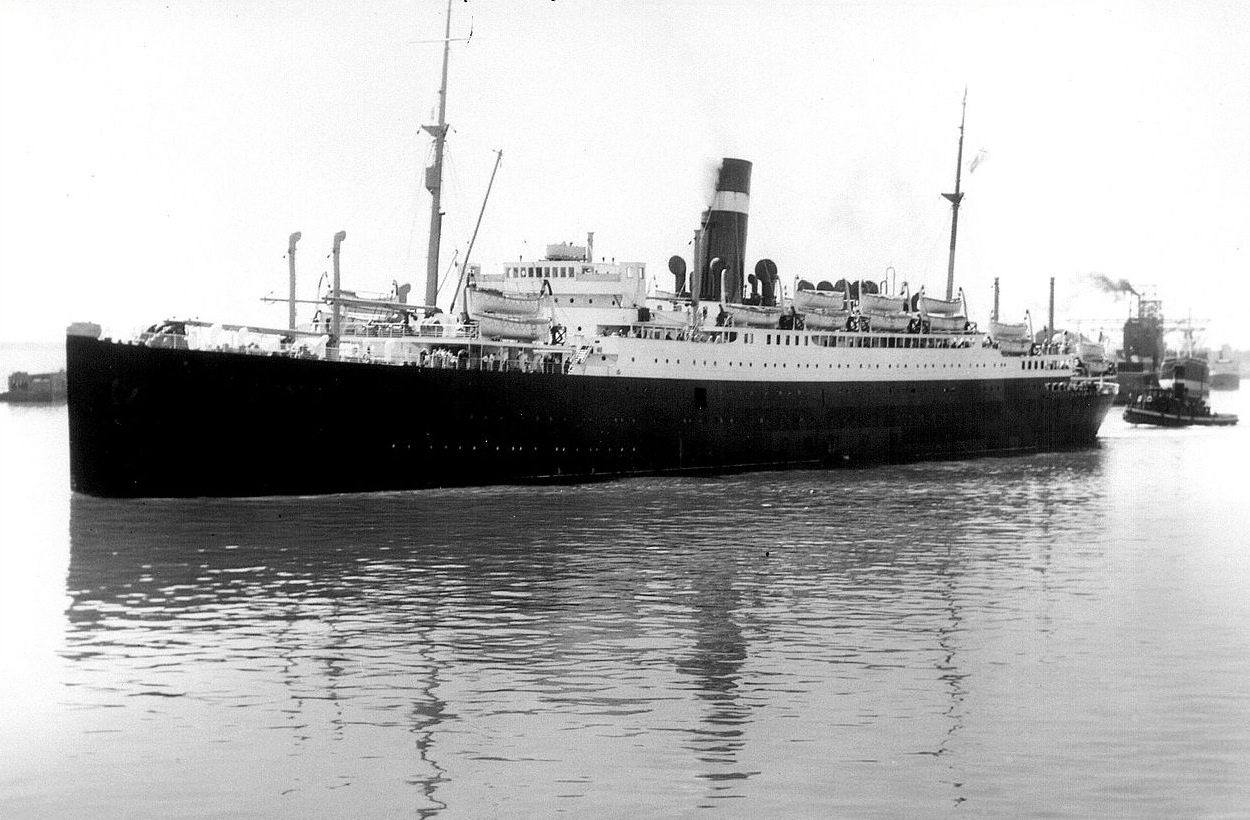
[Add. image] SS Athenia seen in Montreal Harbour – 1933 Credit National Archives of Canada.
The first shot of the Battle of the Atlantic was fired on September 3, 1939 when a German U-boat sank the British liner, the SS Athenia, off the coast of Ireland. When France and Britain declared war on Germany, Hitler was still hopeful of a diplomatic resolution. He believed that after the Polish campaign was completed and matters settled down again that he might be able to dissuade France and Britain from war. For that reason, he wanted to avoid provocations of any kind, and issued strict orders forbidding U-boat attacks on non-military ships. Unfortunately, the first ship to be sunk by a U-boat was the passenger liner Athena, which was a violation of Hitler’s order.

[Add. image] The sinking of the SS Athenia as reported in the New York Times.
As Hitler had expected, this produced outrage among the Allies, as well as in neutral countries. The sinking of the Athena created the false impression that Germany intended to engage in unrestricted submarine warfare, as she had done during the First World War. But the sinking was done in error at dusk when it was difficult to see. The U-boat commander believed that the Athena was a warship. Hitler was furious, but the damage was done and no action was taken against the submarine captain.
On September 18, another German submarine sank the British aircraft carrier Courageous off the Scottish coast.
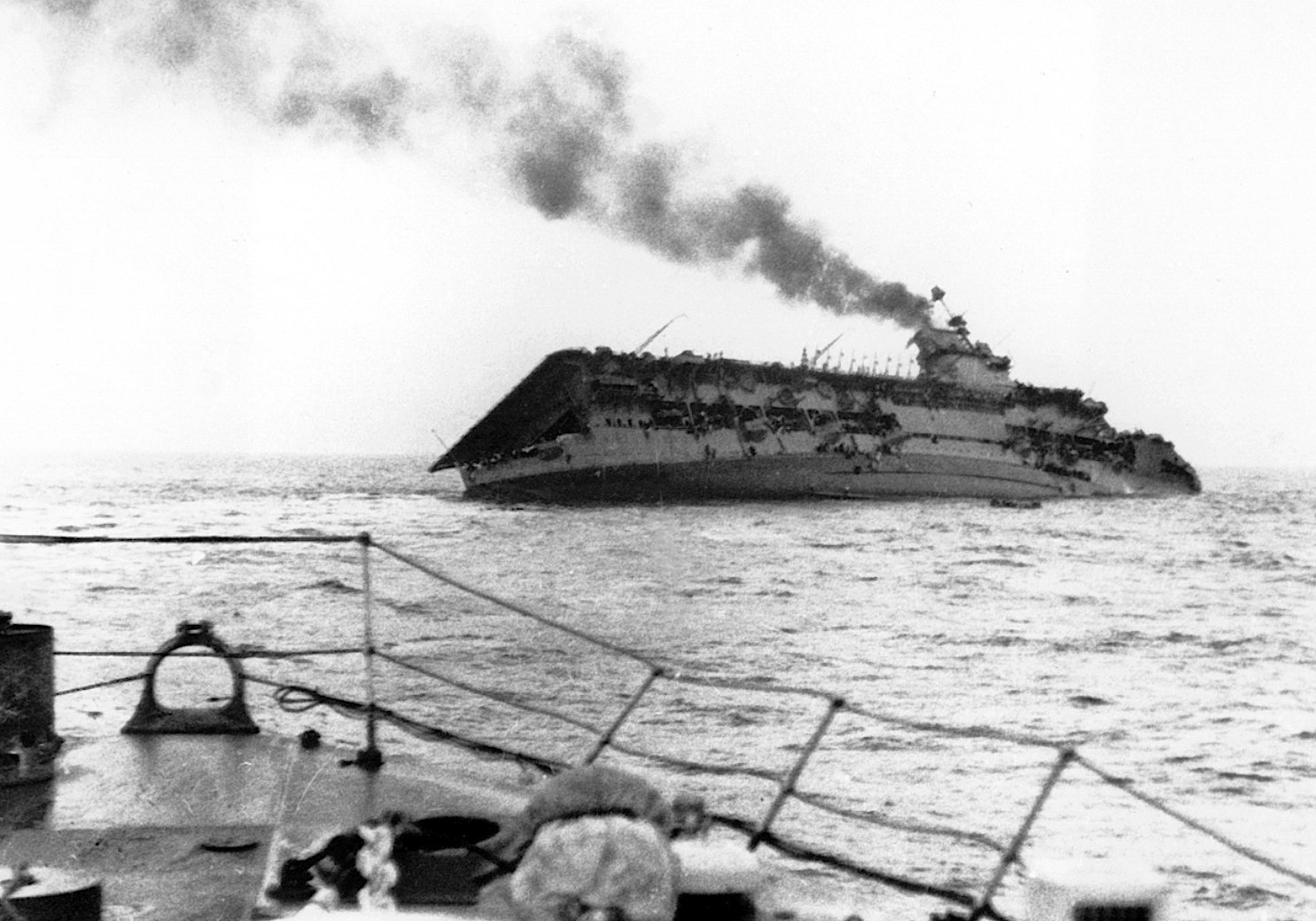
[Add. image] British aircraft carrier HMS Courageous, (22,500 tons), hit by two torpedoes of U-29 on Sept. 17 1939 south-west of Ireland . Sinking lasted 17 Minutes. 518 dead and 741 survivors.
When the war in Poland came to a quick end on September 27, 1939, Hitler made a peace offer to Britain and France, but it was rejected by both. Churchill by now was back in the government in Britain as the First Lord of the Admiralty, and openly clamored for all out war against Germany. He held Germany’s invasion of Poland up as proof that he had been right all along in warning of the Nazis plan to conquer the world. But, as described in previous chapters, Hitler had no such intention, and had no designs whatever on any West European state. Churchill and his gang of war mongers, including Duff Cooper, Lord Halifax, Anthony Eden, Robert Vansittart, and the Jewish controlled press, were working overtime whipping up war hysteria, nevertheless.
The Allied strategy during the Phony War was to hold defensive positions on land while maintaining its naval blockade to weaken the German economy, and to wage naval war. The British and French continued to re-arm at a rapid rate, and a sizable British expeditionary force was sent over to France. Belgium and the Netherlands were determined to stay out of the war. They maintained strict neutrality and refused to submit to pressure from Britain and France to move their troops into their countries.
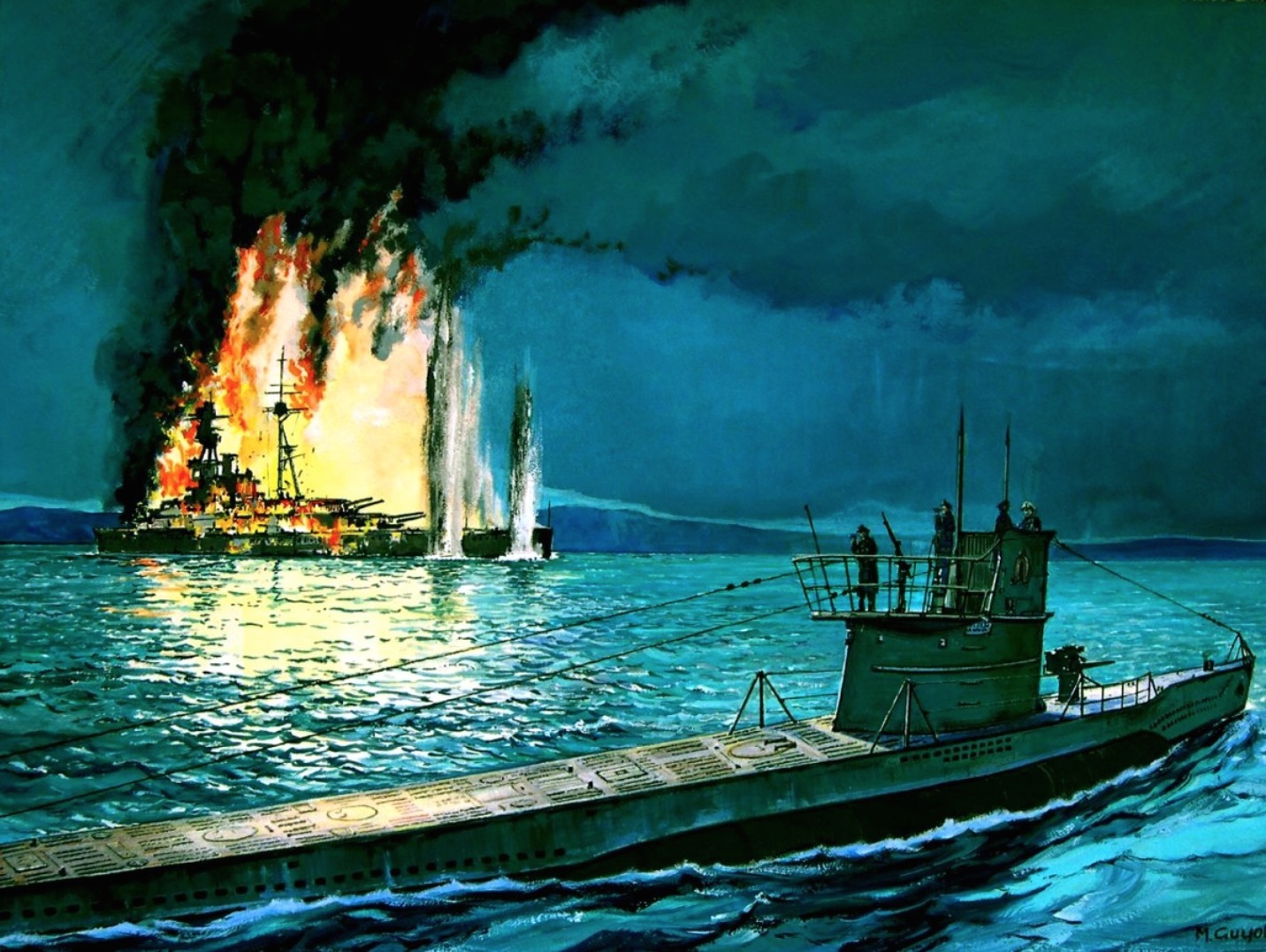
[Add. image] Painting “The Bull of Scapa Flow: Günther Prien, the U-47, and the Attack on HMS Royal Oak”, by Don Hollway
[Add. image] A U-boat scene from the movie, “Das Boot“.
On the 8th of October three U-boats were sunk by the British and another was sunk on October 13. On October 14, in retaliation, a German U-boat entered Scapa Flow and sank the British battleship Royal Oak while it was at anchor. Nothing was happening as yet on land, though the air and naval war expanded furiously. German U-boats stepped up their attacks on British merchant shipping, causing worrying losses.
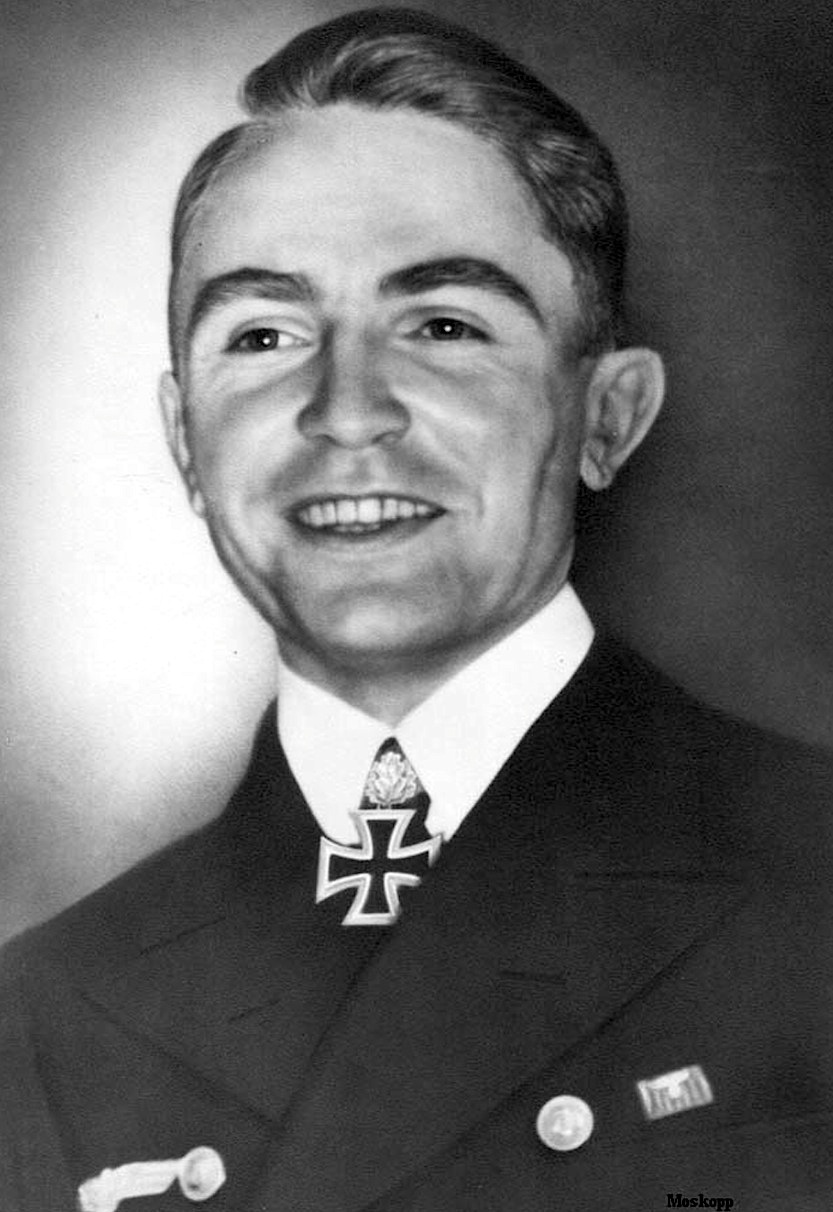
[Add. image] “Der Alte” Kapitänleutnant Günther Prien Commanding Officer, U-47. Despite a short career, one of the greatest U-boat aces of WWII.
The pocket battleship Admiral Graf Spee conducted a particularly destructive raid in the southern Atlantic ocean, destroying nine merchant ships in the fall of 1939. The British cruisers Exeter and Ajax and the New Zealand cruiser Achilles damaged the Graf Spee in a battle off the coast of Uruguay on December 13. The German ship took refuge in the neutral port of Montevideo, Uruguay, where, the Uruguayans insisted, it could remain for only 72 hours. Faced with certain destruction by the Allied ships waiting in international waters just outside the harbor, the captain of the Graf Spee ordered it scuttled in the harbor on December 17.
Continue reading →