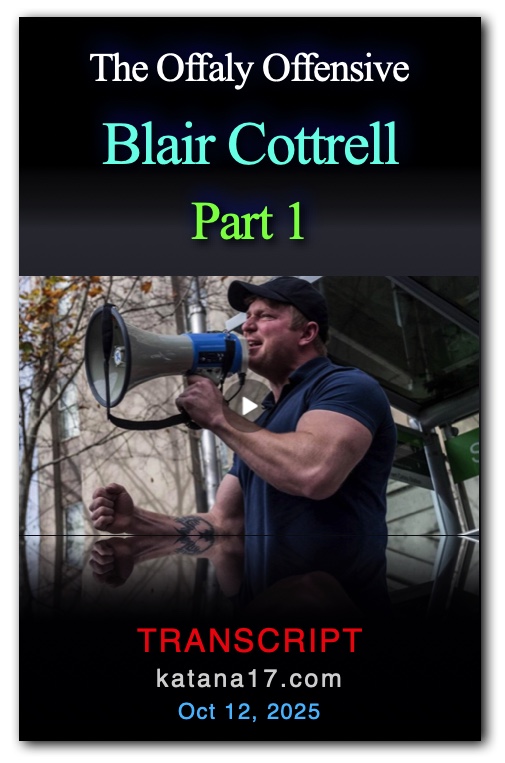
The Offaly Offensive
Blair Cottrell: Part 1
Sun, Oct 12, 2025
[In this video Australian pro-White activist Blair Cottrell joins Graham Conolly on his The Offaly Offensive channel for an in-depth discussion about the cost of right wing activism in Australia. Items discussed include:
1. The host introduces Blair Cottrell as “one of the most notorious and scrutinised figures in Australian activism” for a discussion about his decade in public activism.
2. The conversation begins with confusion over Blair being mistakenly identified as “Shane Warne’s son” during Covid-19 discussions about vaccine theories.
3. Graham reveals he recently had his first child, born at home without midwives: “We had her here in this very living room. Just me and Katie. No midwives even.”
4. They discuss unvaccinated children, with Blair noting: “I have noticed that the kids that don’t get vaccinated and so forth, they don’t seem to have many problems.”
5. Graham explains his background: “I grew up in Ireland. Moved here when I was like 23”, and describes his Catholic upbringing.
6. He describes sectarian divisions in Ireland as cultural rather than serious: “It was light hearted… You still snipe at each other… It’s a tribal thing.”
7. Graham discusses getting a dog during Covid and the responsibility it entailed: “When the novelty wears off a dog, that’s when you find out who you are.”
8. They explore the unnaturalness of suburban life for both humans and dogs, with Graham noting dogs on medication for anxiety in Western suburbs.
9. Blair traces his awareness of pharmaceutical manipulation back to 2008, observing depression advertising: “Are you feeling down today? It could be depression. Call this number… Trying to convince everyone they were depressed.”
10. He explains how drug companies circumvent advertising restrictions: “In Australia, you’re not allowed to advertise the drug. So instead they advertise the symptoms.”
11. Graham discusses family heritage, tracing his name Connolly back to Irish warrior clans: “It means fierce as a hound… These four tribes of Tara… They ruled over Ireland.”
12. Blair describes his grandfather’s greyhound training business: “He built his own Greyhound training facility… People would come from all over the country to have their greyhounds trained.”
13. Blair identifies as a National Socialist: “I would describe myself as a National Socialist, yeah… I think I was a National Socialist from birth.”
14. He explains his political awakening wasn’t ideological but instinctual: “I just always went with my gut, what I feel is right instinct… Anything that was sort of been put to me as the socially accepted thing, if it didn’t seem right to me, I would go against it.”
15. Graham describes being called a Nazi online before reading Mein Kampf: “I was being called Nazi so much online… I thought I was real clever by going, how can I be a Nazi? I’m not a socialist.”
16. Discussion on the “right of conquest” using alien invasion analogies: “If you can imagine a spaceship of space aliens… What are they supposed to do, go, oh, there’s already people here. We’ll just go!”
17. Graham expresses belief in aliens and simulation theory: “There’s good possibility it’s a simulation, I think.”
18. Blair argues humans aren’t adapted to Earth: “I’m driving down the street and the sun’s in my face and I can’t see… If we developed on this planet, shouldn’t I be able to stand the sun glare?”
19. Blair advocates for genetic improvement: “I think the greatest purpose in life… Is to produce children that are smarter and healthier than you are.”
20. He criticises modern mate selection: “There’s a confusion there as a result of wealth, a great deal of wealth producing higher status men who otherwise wouldn’t have status.”
21. Blair discusses how civilisation removed consequences for bad behaviour: “savages are more dignified in the way they talk to each other because they know they’re risking having their skulls split if they’re not polite.”
22. He explains the United Patriots Front’s rapid growth: “I could hold my phone up to my face and film myself talking… And that video would get millions of views… More reach than Channel 9, 7 and 10 would get on social media put together.”
23. Blair describes government counterinsurgency tactics against his movement: “I was the first person in Australia to have my bank accounts disappear. I was the first person in Australia to be charged with what was essentially a thought crime for a Facebook post.”
24. He explains the “Countering Violent Extremism” department: “Their job is to create this layer of plausible deniability for isolating and disrupting dissidents and critics of the Australian government.”
25. Blair details the isolation strategy: “Your primary resource is the people of Australia… So the job of countering violent extremism is to cut you off from the people of Australia.”
26. He describes Tom Sewell’s early involvement: “Tom was just watching… He was just a sponge. He was listening to everything I was saying, he was watching everything we were doing, and he was just absorbing all of it.”
27. Blair praises Tom’s character: “All he’s ever wanted to do is help people… The man had so much integrity that the path was almost inevitable.”
28. He expresses concern about current political policing: “The political policing in Australia right now is really hectic… People getting raided on no evidence for stuff they obviously haven’t done.”
29. Graham’s first red pill was 9/11: “I was studying architecture at the time… From day one, I was like, what? No way! .. Some of the best engineers in the world… You could see them just get visibly uncomfortable.”
30. Reading Mein Kampf was transformative for Blair:
“I thought, oh, that’s Adolf Hitler’s book. Adolf Hitler wrote a book. No one told me that… Why didn’t anyone tell me?”
31. He was disappointed by the book’s content: “I was like, this isn’t the book of an evil genius murderer… Where’s the gas chambers? Where’s the evil takeover the world part? It’s not in here!”
32. Blair questions Holocaust facilities: “I thought, wow, those must be some hectic facilities… And then they show me these little broken down shower cubicles with wooden doors.”
33. Graham discusses his parents’ generation’s naivety: “my parents generation were naive… They didn’t have the Internet… It’s not that long ago that people were very superstitious.”
34. Blair observes cultural homogenisation: “now the idols exist on the screens… Now everything’s more universal… Every suburb, every precinct almost feels like the same.”
35. He criticises immigrant behaviour in Australia: “I think if you were in a country that wasn’t… Built by another ethnic group and you were a guest, you’d think you wouldn’t be so loud and obnoxious.”
– KATANA]
https://rumble.com/v706mrq-blair-cottrell-part-1.html?e9s=src_v1_cbl%2Csrc_v1_ucp_a
https://rumble.com/c/BlairCottrell?e9s=src_v1_cbl
https://instagram.com/bcaus89
https://twitter.com/b_cottrell89
t.me@realblaircottrell
Published on Sun, Oct 12, 2025
Description
Blair Cottrell: Part 1
The Offaly Offensive
516 followers
158
2
7 days ago
5.01K
Podcasts
Politics
BlairCottrell
UPF
LADSOC
australianpolitics
controversial
interview
insurgent
politicalpersecution
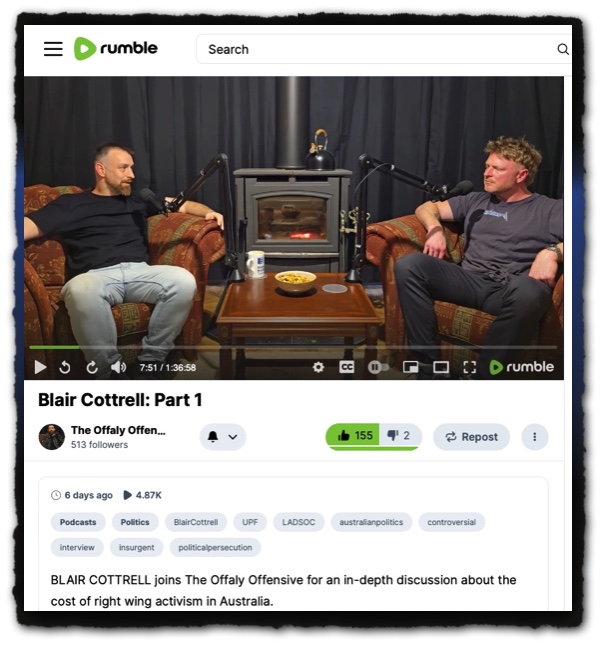
BLAIR COTTRELL joins The Offaly Offensive for an in-depth discussion about the cost of right wing activism in Australia.
We go behind the headlines to meet the man himself and quickly discover he’s just an everyday Aussie bloke who cares deeply for his own people. In this unfiltered conversation we dive deep into the realities facing those leading true Nationalist movements in present day Australia.
We cover the rise and fall of United Patriots Front (UPF) and LADSOC. Why Blair briefly stepped away from the movement and why he felt compelled to return.
It is an unapologetic analysis of politics and current affairs from a man the Justice System considers and treats as an insurgent.
Part 1 is LIVE NOW.
Stay tuned for Part 2.
Like, share and subscribe so you don’t miss the conclusion!
GUEST LINKS:
Blair Cottrell’s Telegram:
https://t.me/realblaircottrell
Show less
32 Comments
_____________
Following Transcript Quality = 5 Stars
1 Star — Poor quality with many errors, contains nonsense text 2 Stars — Low quality with many errors, some nonsense text. 3 Stars — Medium quality with some errors. 4 Stars — Good quality with only a few errors. 5 Stars — High quality with few to no errors.
NOTE: Readers can help improve the quality of this transcript by putting corrections in the Comment/Leave a Reply section. Don’t be just a consumer, contribute to the cause, however small. Thanks.
TRANSCRIPT
(Words: 22,004 – Duration: 97 mins)
[Intro video]
[00:26]
Graham Connolly: Welcome back to The Offally Offensive.
My guest today is one of the most notorious and scrutinised figures in Australian activism, Blair Cottrell. For over two and a half hours, we dissected his decade in the public eye, focusing on his successes, his failures, and the controversies that have defined his time in activism. We talk about the rapid rise and the complex collapse of major movements like the United Patriots Front and Lads Society, why he briefly stepped away from the movement, and the reasons he felt compelled to return. Throughout this episode, we explore a powerful question. What is the true cost of being unfiltered? It’s a genuine organic two and a half hour chat. Let’s get straight into it.
I should probably say that I’m here with this important guest that I have today. It’s Shane Warne’s son, Blair Cottrell! [chuckling]
Blair Cottrell: I’m not that important.
Graham Connolly: Why did I call you Shane Warne’s son? [chuckling]
Blair Cottrell: There was a bit of a fiasco back in the Covid days where I heard a rumour. I heard a rumour that Shane Warne had gone overseas to try to save himself from vaccine poisoning or something and that’s why he died.
Graham Connolly: Yeah.
Blair Cottrell: And so I shared that rumour with some people and I heard that through family, friends.
Graham Connolly: What was funny was, is that that was the first time I ever seen you.
Blair Cottrell: Really?
Graham Connolly: So you got me like, you got me with that! And at the time, I was of course, anti-Covid, anti-vaccine. I was sending that to my friends in Ireland going:
“Look at Shane Warne son’s come out and said this….”
And then like literally, like 12 hours later, I found out that I was:
“Oh, it’s this guy called Blair Cottrell.”
Blair Cottrell: If you watch the video. I never claimed to be Shane Warne’s son.
Graham Connolly: No. But I only seen like a little snippet.
Blair Cottrell: Someone, some international news, including Indian news. I think cthey shared it saying:
“This is Shane Warren’s son.”
And everyone believed it.
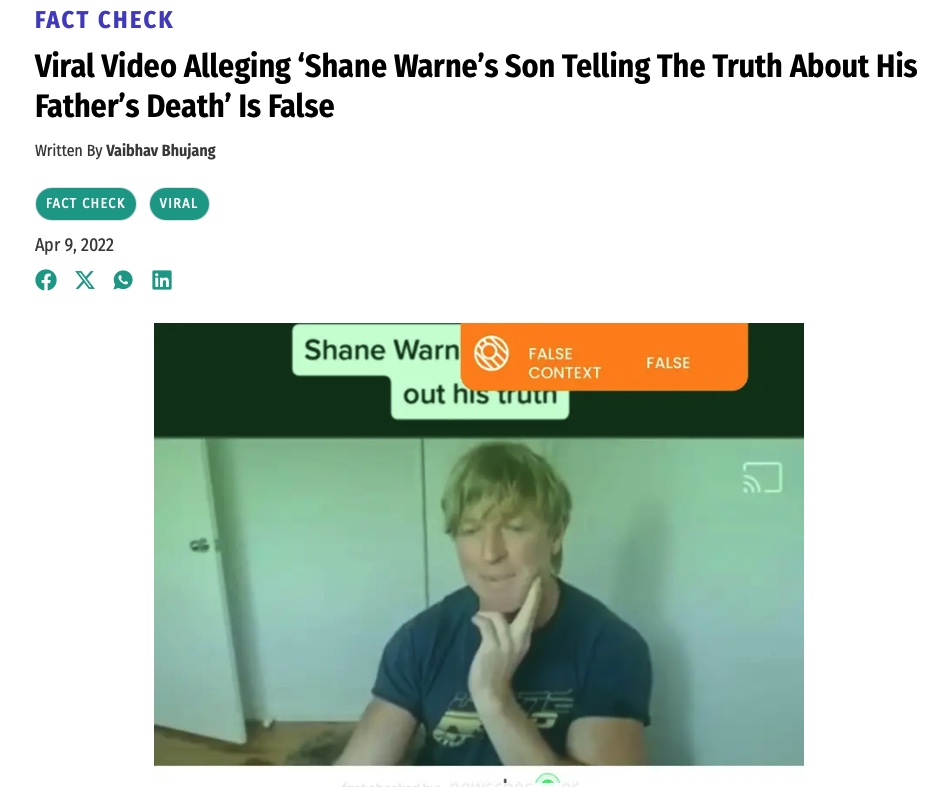
Graham Connolly: I believed it. I had to literally 12 hours later, I’m like frantically typing to my mates going:
“It’s not Shane Warne’s son!”
Because your credibility is important to you when you’re sort of Right-wing, you’re anti-establishment.
Blair Cottrell: Yeah.
Graham Connolly: You got to protect your credibility. So straight away, I had to correct the record. [chuckling]
Blair Cottrell: Yeah, well, I didn’t even know about that. Tom Sewell sent it to me with a crying, laughing faces.
Graham Connolly: Yeah.
Blair Cottrell: Because he saw it going viral. I was late to the party. I was at work, at home. I hadn’t even seen it yet.
And then apparently. Yeah, but I’m not Shane Warne’s son. My name is Blair Cottrell.
Graham Connolly: This is Blair. Yeah, thanks for coming in, Blair.
Blair Cottrell: Yeah, no worries, mate. It was a bit of a trip out here to Geelong.
Graham Connolly: It is from Frankston. It’s like two hours. It’s all the way around there.
Blair Cottrell: Last time I came to Geelong. [Graham goes off camera for something] Yeah, no worries, mate. Yeah, I noticed.
Graham Connolly: There’s still a learning experience for me here.
Blair Cottrell: So you’ve recently had a baby?
Graham Connolly: I’ve had a baby recently, yeah. Well, Katie had the baby.
Blair Cottrell: Yeah.
Graham Connolly: I won’t take credit.
Blair Cottrell: Oh, is it the first one?
Graham Connolly: First one, yeah.
Blair Cottrell: Congratulations mate.
Graham Connolly: Thank you very much. Yeah. It’s three months old now. We had her here in this very living room. Had her, just me and Katie.
Blair Cottrell: Home birth?
Graham Connolly: No midwives even. We didn’t even have, like, normally you’d have a midwife, you have midwives from the hospital or whatever. But we didn’t have any with midwives or anything. So kate did very well.
Blair Cottrell: I’ve heard a lot of that going around lately.
Graham Connolly: Yeah.
Blair Cottrell: Especially since that pandemic fiasco. There’s a lot less trust in the official medical institutions and people are just kind of going natural.
Graham Connolly: Yeah.
Blair Cottrell: And interestingly, my sister did the same thing. She’s got two young boys now. She was told she would never have kids. She had endometriosis and there was problems with her reproductive system. But she focused herself on healing and she had two boys, naturally. Home births.
Graham Connolly: Wow!
Blair Cottrell: And there’s nothing wrong with them. They’ve had no vaccines and they’re the biggest, strongest, healthiest boys you’ll ever see.
Graham Connolly: You notice it with the kids, don’t you? The ones that are not vaccinated?
Blair Cottrell: Yeah. Oh, well, I don’t know. I’ve got nothing to compare it to because I haven’t seen that many different babies. But I have noticed that the kids that don’t get vaccinated and so forth, they don’t seem to have many problems.
Graham Connolly: Yeah, no, I’ve noticed this. We had a couple that used to play a game called Vaccinate or Not. So like every child that we’d meet we literally have a little game with them. It seems like a bit more. But where the game, they’d guess, was the child vaccinated or not? And the funny thing about it is you’d always find out because the parents of vaccinated children are always very fast to brag about it. They’re very proud of themselves.
Blair Cottrell: Still these days. You think they would be?
Graham Connolly: I think they still are, yeah.
Blair Cottrell: What do you think that’s about?
[04:54]
Graham Connolly: Being accepted, socially, I think. Comes back to, especially women. I think women have always needed to be part of the tribe socially, haven’t they?
Blair Cottrell: Maybe also it’s a way to cope with the guilt that perhaps they were wrong.
Graham Connolly: Maybe.
Blair Cottrell: It’s:
“Well, I did the right thing. I vaccinated my child. I’m a good person.”
Maybe trying to block out the possibility that maybe that wasn’t the right choice.
Graham Connolly: Yeah. There’s the old saying, it’s easier to fool a man than to convince a man he has been fooled!
Blair Cottrell: Unfortunately, that’s true.
Graham Connolly: It is true.
Blair Cottrell: One of the ways I got started in public commentary, activism, was to try to convince Leftists that the whole world view they’d been sold was just kind of a modern communist propaganda trope. And I was convinced I could do it.
Graham Connolly: Yeah.
Blair Cottrell: I angered a lot of them. I don’t know if I converted any, but that’s the way I first got started, with a whiteboard in my bedroom. That was back in probably 2015, early 2015, I think.
Graham Connolly: Well, I think before I ever got involved in real life doing anything, what I was trying to do was I had this thing in my head where if I can wake up my family and my loved ones and you can wake up your family and your loved ones to “wake up” then we’ll reach critical mass and everybody will wake up!
But it’s not as easy as you think it is! Even just to wake up to people that you think are going to be receptive to it.
Blair Cottrell: Your family, are they here in Australia? Ireland?
Graham Connolly: Ireland.
Blair Cottrell: Yeah.
Graham Connolly: I’ve got a brother in Canada.
Blair Cottrell: Yep.
Graham Connolly: And the rest are in Ireland.
Blair Cottrell: So you grew up in Ireland?
Graham Connolly: I grew up in Ireland. Moved here when I was like 23. Came here for a holiday.
Blair Cottrell: Southern. Northern?
Graham Connolly: Southern. Right in the middle, little place called County Offley.
Blair Cottrell: That would make you Catholic?
Graham Connolly: That would make me Catholic, yeah. Grow up in a Catholic school, all that sort of thing. Yeah.
Blair Cottrell: Interesting! That would have been very, …
Graham Connolly: It’s actually insane! You, like, you don’t realise it comparison, but it was like the Catholic Church had a real grip on the school system in Ireland back that time.
Blair Cottrell: What year would that have been?
Graham Connolly: I would have started school probably around 89.
Blair Cottrell: Right.
Graham Connolly: 88, 89.
Blair Cottrell: I was born 89.
Graham Connolly: Yeah. Right. So I was probably starting school around then. Yeah.
Blair Cottrell: Yep. Was there much. I suppose there was a lot of that sort of Catholic nationalism going on, Irish nationalism. But if that’s how you would describe it. Was there much conflict between the Catholics and the Protestants around that era?
Graham Connolly: There was in a, but it was light hearted. So where I’m from, I never actually thought much about it. But we had our own church. They had their own church. But there was a small population of Protestants where I was from. They had their own schools, their own churches.
Blair Cottrell: But they still lived in the same region.
Graham Connolly: They still lived in the same villages. We had a handful, like, I’m from a village of like 300 people and there was like a handful of families in that village that were Protestant. But they usually lived on the outskirts of the villages, nicer houses [chuckling] and a little bit of land and stuff like that. But it was funny because even as kids we didn’t understand what the difference was between Catholics and Protestants. But you still snipe at each other, you know?
Blair Cottrell: Is that because it’s a cultural thing?
Graham Connolly: Yeah, it’s a cultural thing, I think it’s no different than you snipe at the Travelers. The Travelers snipe at the settled people. You just always have conflict, I think, between people.
Blair Cottrell: It’s a tribal thing, though, isn’t it?
Graham Connolly: It’s a tribal thing, yeah.
Blair Cottrell: I think people almost need to feel like they belong to an in-group and they also need an enemy. Even if everyone is the same, they’ll find a way to make an enemy out of the people over the next hill.
Graham Connolly: But it was funny, like in that, where I was from, in the village I was from slagging matches were to go. Everybody loved to slag each other. It was like quick wit and just slagging off each other, whatever you could think of to make each other. But it was no real hard feelings involved in it. It was just people trying to be funny towards each other, taking the piss out of each other. It’s just an Irish thing.
Blair Cottrell: Yeah.
Graham Connolly: And it was the same. The Protestant would just give you one extra thing that you could slag them over and the same in reverse. But they still came down and played soccer with us, like played football in the park. Do you know what I mean?

So it was like this weird divide that was there, but it wasn’t actually there. You didn’t go to the same schools, you didn’t go to the same church, but you played football together, you still hung out together.
Blair Cottrell: Right.
Graham Connolly: You know, you still went trick or treating on Halloween together and stuff like that.
Blair Cottrell: Is this just because maybe your village was low population and it wasn’t particularly vicious, the division?
[09:06]
Graham Connolly: Well, I think in the Republic of Ireland there wasn’t much division anyway by the time we were growing up. It was like almost as if., … And the Northern Irish people would often say that they were abandoned by the Republican Irish people like that once we got our independence, it was like:
“Whoa, we got our independence. Turn their back on them, kind of thing!”
That can be debated because there’s an awful lot of people in the Republic that still don’t accept that it’s not a united Ireland. So but there is still that little bit of jabbing that goes on there.
Blair Cottrell: Yeah. When did you last go back? Have you been back for a visit?
Graham Connolly: I used to go back once, basically every year. But when Covid happened I haven’t been back since. I got a dog. Well, you probably heard howling there a second ago. [chuckling] I got a dog.
Blair Cottrell: It’s a big dog.
Graham Connolly: Yeah, I got a dog when Covid happened.
Blair Cottrell: It nails you down sometimes, …
Graham Connolly: Sometimes you don’t like, think through everything about like, I love the dog. The dog got me back out and about, got me back training. Because you have to start walking the dog.
And when I start walking the dog, I had become a little bit of a bloody couch potato to be honest with you, I’ve been working the same job for 10 years and it was an office job and stuff like that. So then I got the dog. And it’s when the novelty wears off a dog, that’s when you find out who you are, I’ll tell you that now. You get a dog and like you’re., … Because, it’s the fairy tale again. You think of how nice to have a friend there, have it out there. And for the first three weeks it’s new, it’s fun! But then it’s a chore. You know what I mean?
Blair Cottrell: Correct.
Graham Connolly: Like, are you going to keep walking this dog every day and the novelty’s worn off? Like the new car novelty. Once the new car smell has worn off, [chuckling] worn off the dog, are you going to keep bringing it for a walk every day?
Blair Cottrell: It becomes a time and money pit, doesn’t it?
Graham Connolly: Time and money pit! And then it’s like, now you have to get through that period of:
“Fuck doing it!”
Like almost that period of regret.
And if you do, because you have to then, because it’s a responsibility, then you come out the other end loving the dog.
Blair Cottrell: I’ve got a love hate relationship with dogs myself.
Graham Connolly: Yeah.
Blair Cottrell: I think suburbia in particular can be a cruel place to have a dog.
Graham Connolly: Yeah. It can be.
Blair Cottrell: Because they can smell and hear everything.
Graham Connolly: Yeah.
Blair Cottrell: And they’re not typically raised or bred to be around that much constant stimulation.
Graham Connolly: Yeah.
Blair Cottrell: So it can be very stressful for them. They’re supposed to guard livestock. They’re supposed to have a lot of land to run around on. They’ve got a job to do and they’re proud of their job. They understand their job. Whereas in suburbia they’re sort of just suffering alongside you.
Graham Connolly: I’ve noticed even with my two, there’s a couple of dogs down the way and I think they be left out or whatever. It’s like one of those things where people got dogs and then they just can ignore them. They basically probably get a bowl of food every day and they’re just ignored.
And sometimes you hear them whimpering and whinging and crying and giving out, and it affects my dogs! You can hear it, because they can hear these dogs suffering, like I’m telling you, I agree, I think that you’re right.
Blair Cottrell: It’s misery loves company man. Humans, they’re suffering here in suburbia in this unnatural environment where we develop cancers from all the radiation through the air and the Wi-Fi and so forth. And that’s why the dogs get cancers as well. Because it’s an unnatural environment.
Graham Connolly: Exactly!
Blair Cottrell: And we have to subject the poor beasts to the same suffering that we’re in. We can’t do it ourselves!
Graham Connolly: And that’s why in the West, we have dogs that have behavioural problems. It’s weird, right? Because if you go to places like Mexico or India where these dogs are just roaming the street.
Blair Cottrell: What do you mean behavioural problems?
Graham Connolly: Like dogs getting anxiety and shit!
Blair Cottrell: Are they on medication?
Graham Connolly: Yeah, on medication! [chuckling] Like people give their dogs medication in suburbia.
Blair Cottrell: I think my dog’s got ADHD!
Graham Connolly: Mine get to go chase rabbits and stuff like that every day. So they seem pretty good. But a lot of people have their dogs on medication for anxiety.
Blair Cottrell: I’ve known cats that are on that kind of thing. I’ve known diabetic cats that have to have their insulin shots.
Graham Connolly: Yeah, right. And even there’s a guy, I don’t know if you ever seen Caesar Milan. The Dog Whisperer like on YouTube. He’s pretty bloody good to watch sometimes, like his videos and stuff like that. But he turns up and it’s always these Western dogs basically like suburban dogs that just have serious behavioural problems like their barking and just like biting other dogs, fighting other dogs, all kinds of carry on. And he always makes the comparison that if you see these street dogs in India that have like three legs and like their tails off and like these dogs have gone through the wars.
Blair Cottrell: I don’t want to imagine what happens to dogs in India. The poor basterds!
Graham Connolly: Yeah, yeah.
[13:09]
Blair Cottrell: But dogs on medication is interesting. Medication is a double edged sword though. Isn’t it? It can prolong life, but what quality of life is it prolonging at the end of the day?
Graham Connolly: Yeah.
Blair Cottrell: And I’m alive now because of medication, I can tell you that.
Graham Connolly: Really?
Blair Cottrell: Well think about it. Like you could possibly say the same for yourself. You had a bad infection.
Graham Connolly: Yeah, 100% actually.
Blair Cottrell: Yeah. We would typically die of, …
Graham Connolly: I had my appendix out when I was a kid.
Blair Cottrell: Yeah, there you go. Often without antibiotics, deep tissue infections or even just sinus infections. They were a common killer of men for a long time. Did I looked up recently the average life expectancy for the standard human in 1900 was 32! 32 years old was the average life expectancy* for you and me in 1900.
[This figure is misleading as it was due to a high death rate for new borns and young children, etc.]
And now it’s gone up to about 76 or something.
Graham Connolly: I didn’t have my first baby till 42.
Blair Cottrell: Well, there you go.
Graham Connolly: You know when you put it like that.
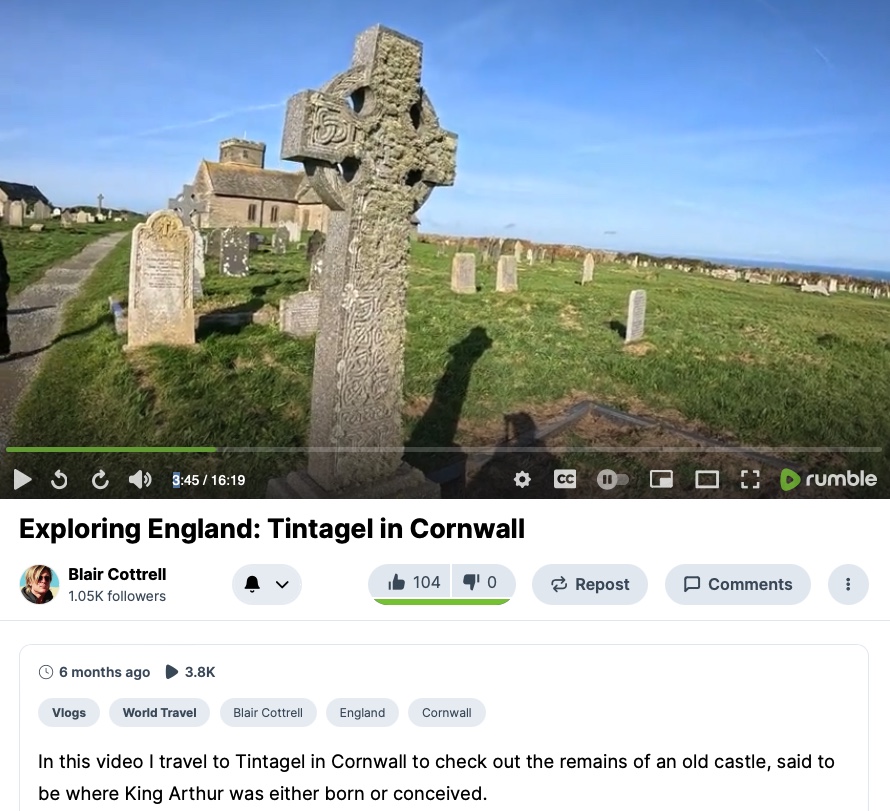
Blair Cottrell: And it makes sense because when you walk through., … Because I went to England last year, October last year. And when you walk through the graveyards on a lot of the stones there’s this guy’s dead 22, this guy’s dead 28. And you’re thinking, why so young? And it’s disease, infections, things that they didn’t have medicine for 100 years.
Graham Connolly: Yeah. But it became corrupt, didn’t it?
Blair Cottrell: Like I said, double edged sword.
Graham Connolly: Yeah, it’s a double edged sword. So like they discover these things like penicillin and discover these things that save a lot of lives and yeah. Like fighting against disease and fight against this and fight against that. Fight against infection.
Blair Cottrell: Pharmacology. Well, the Greek word for witchcraft is “pharmakia”. It’s pharma.
So the Greeks understood witchcraft as a form of potion making or drug brewing, you might say. And just like in traditional European folklore, there’s good witches and bad witches. And so Medicine can be used for good or bad, but there’s a whole industry. I don’t know if we’ll get started on it, but the first time I considered the lucrative and ruthless exploits of pharmacology was 18 years old. I was working in the city Melbourne. Would have been roughly when you arrived in Ireland [Australia], I reckon, 2008. And I saw on the ceiling or the roof of Southern Cross Station, huge banners! Huge, big banners saying:
“Are you feeling down today? It could be depression. Call this number.”
Graham Connolly: Yeah.
Blair Cottrell: Trying to convince everyone they were depressed. And I thought. I didn’t think, maybe I’m depressed. Maybe that’s what everyone else was thinking. I was thinking:
“Why are they putting so much effort into trying to make people feel like they’re depressed?”
And then I looked into the number on the bottom and I did some research and I found out in certain states in America, you’re allowed to advertise prescription drugs like Prozac antidepressants, directly to the public.
Graham Connolly: Wow!
Blair Cottrell: Just on TV:
“Prozac. Make your life better. Come and buy it from your local pharmacist!”
Or go get a prescription for it first, whatever. In Australia, you’re not allowed to do that. You’re not allowed to advertise the drug. So instead they advertise the symptoms.
Graham Connolly: It’s a way around it, isn’t it?
Blair Cottrell: And then you call Beyond Blue, or you call your psychologist, and then you end up with a psychiatrist. You get the prescription, you’re on the drug.
Graham Connolly: Everybody’s on it! Everybody’s on it. Fucking crazy!
Blair Cottrell: Something like a third of all people are on some sort of prescription medication for their mood. It makes you realise the kind of things that humans have been through in history, but now the stress of your mortgage or something is too much.
Graham Connolly: Yeah.
Blair Cottrell: It doesn’t really make sense to me.
Graham Connolly: No, it’s crazy, isn’t it? Yeah. It just goes to show what we’re not made for, though. We’re not made for that stress and trying to pay a bloody Bill or something. I think we’re made for war! [chuckling]
Blair Cottrell: Some of us.
Graham Connolly: Yes. Yeah.
Blair Cottrell: There’s different castes of men.
Graham Connolly: There is, yeah.
Blair Cottrell: Well, have you heard of the caste system? The warrior, the merchant?
Graham Connolly: Yeah, a little bit. Tell me more.
Blair Cottrell: Well, what do you think you belong to?
Graham Connolly: Oh, warrior caste, I reckon, because if I look at my name, the Connolly name, it goes back a thousand years. Thousands of years, actually.
Blair Cottrell: Where does it come from?
Graham Connolly: Ireland. Well, the Celtics.
Blair Cottrell: What does it mean, Connolly?
Graham Connolly: It means “fierce as a hound”.
Blair Cottrell: Ah.
Graham Connolly: Yeah. So it’s got to be war! And Ben did a lot of research recently. You know Ben, our man Ben?
Blair Cottrell: Yeah.
Graham Connolly: Ben did a lot of research recently. And it’s funny that his mother’s side of his family and my family name have mad connections back in the day.
Blair Cottrell: Like how was that?
[17:06]
Graham Connolly: His family were like farmer caste in Ireland and ours were warrior caste and apparently like we used to work together, like we defend their farms and shit, way back when. So the mother side of his family.
But I want to talk to him more about. Because we just talked a little bit about over text like. What’s the name? I’m trying to remember it. Because his mother’s family name changed their name. It seems like they left and then came back like hundreds of years later to Ireland and then took back their Celtic name or whatever. So they left their Celtic name behind, went to France or somewhere like that. And then they came back hundreds of years later and took back their Celtic name. And then there’s this connection to the Connolly clans in Ireland.
So the Connolly clan in Ireland as well you can trace back to the what’s called the four tribes of Tara [sp] of the Hillitara [sp]. So it’s like four very prominent tribes way back when, … And then even before that.
Blair Cottrell: Prominent for what purpose?
Graham Connolly: Like basically they ruled over Ireland. Like these four tribes of Tara
Blair Cottrell: Landowners?
Graham Connolly: Landowners and yeah, like hikings [sp] and stuff like that that’s what they were called. Like there’s this regional kings.
Blair Cottrell: I’ve known a few Connolly’s.
Graham Connolly: Yeah.
Blair Cottrell: And what that indicates is a lot of people survived from the Connolly line.
Graham Connolly: Yeah.
Blair Cottrell: Meaning usually that indicates that there was money there or there was power there.
Graham Connolly: Yeah. Well, no, not when I was growing up, mind you! [chuckling]
Blair Cottrell: Right. Yeah.
Graham Connolly: But hey, things change, I guess.
Blair Cottrell: What did your family when you were growing up have a stake in a certain enterprise? What were they doing for a job?
Graham Connolly: No, not really. Not really. No.
Blair Cottrell: It’s easy to lose.
Graham Connolly: I think that’s what happened as well. Yeah.
Blair Cottrell: Yeah.
Graham Connolly: They just lost themselves, I reckon over the years, you know, under English rule really is what happened. You become peasants, like.
Blair Cottrell: Oh, it’s the English’s fault!
Graham Connolly: Yeah. [chuckling]
Blair Cottrell: If it wasn’t for the poms Graham here would be rich and famous! Those poms have robbed him of his fate, his future! [Graham laughing] Yeah. But my family comes from just dairy farmers.
Graham Connolly: Yeah, right. Yeah.
Blair Cottrell: They had a fair bit of land, but they were just workers. They were cold, hard bastards!
Graham Connolly: Yeah.
Blair Cottrell: And they disagreed with each other, and the family kind of split apart, and we all ended up with nothing. And that’s what happens.
Graham Connolly: It is what happens. Yeah.
Blair Cottrell: But families who stay together, let me tell you, mate, they make money!
Graham Connolly: They do.
Blair Cottrell: And these days, families atomizing from each other. By atomizing, I mean every individual in the family going their separate ways, which tends to happen more and more in the modern day.
Graham Connolly: It’s kind of become what we do in the West, and it’s wrong. We grew up with this. I don’t know if you grew up with it here, but we grew up with it back home in Ireland, where you don’t talk about politics, you don’t talk about money, you don’t talk about religion. This was like the three things you’re not supposed to talk about because for an easy life, or a comfortable life, but it’s the three things you should be talking about! It’s the three things that rule your life! [chuckling]
Blair Cottrell: Three things that matter.
Graham Connolly: Yeah, it’s the three things that matter! You should be sitting around the dinner table discussing this stuff, educating your children and stuff. But that’s not what happened back then. It was like:
“No, don’t talk about that, because it’ll lead to conflict in the family. Don’t talk about that!”
Blair Cottrell: Yeah. There was never the conflict along those lines in my family, though. It’s not like anyone ever disagreed over politics or religion. People just in the family gradually began to see each other less and less. I mean, we used to get together when I was a kid and have Christmas together. I used to see my aunties and uncles. We used to go and see my grandmother and grandfather.
Graham Connolly: Where did you grow up?
Blair Cottrell: In Southeast Melbourne.
Graham Connolly: So where you are now?
Blair Cottrell: Yeah, I’ve always lived in the same spot, and my family was kind of all around there. My family was originally from the bottom of Falls Creek at a town called Mount Beauty. A lot of dairy farming land around there. My uncle recently went back there and bought some property. He’s done quite well for himself.
Graham Connolly: Beautiful up there, man!
Blair Cottrell: It is nice.
Graham Connolly: Real nice.
Blair Cottrell: It’s cold in the winter.
Graham Connolly: It gets very cold!
Blair Cottrell: But I don’t mind that. Yeah, I don’t mind it. I’m always running hot.
But what I’m saying is, as time has gone on, I think there’s a certain pressure or influence in society that has caused us all to split off into our own little individual cliques. And so we only spent time with our immediate family. And then it got even worse than that, where now even I don’t even really have that much time to speak to my sisters anymore because I’m so busy. They’re living their own lives. Everyone’s got their own rent or mortgage and car loans and Netflix subscriptions.
Whereas if we could all come together and reclaim a stake in a certain enterprise, even if it was just like soap making or carpet laying or something, you know what I mean? Then you can really start to like establish a bit more for our wealth.
Graham Connolly: Well, you actually see, is it the Mormons or something over here? I’ve noticed that. So in my job we have a factory off the office that like manufactures steel products and stuff like that for jump farms and all that sort of thing. But a lot of welding and stuff goes on.
Blair Cottrell: Who has that?
Graham Connolly: Just the company I work for.
Blair Cottrell: Right.
[21:42]
Graham Connolly: And it’s got like:
“We need an air supply.”
And I’ve noticed that all the companies that supply air are all Mormons. All of them! Every company!
So if you try to play one company off the other, for example, for quotes and stuff like that, they’re actually they’re in cahoots with each other. Like you notice it because they’ll send you an invoice and it actually looks the same as the invoice from the other company. All the companies are sewn up by the same families, like in, same extended family. It’s almost like the Amish.
Blair Cottrell: It’s a shame. It comes down to it, the way I see it, you’re either working with your own family or you’re working for someone else’s.
Graham Connolly: Yeah.
Blair Cottrell: If you’re not working with your own family, in a family owned factory, a family owned business, if you’re going out on your own, which is supposed to be something that’s almost encouraged and admired, isn’t it?:
“Oh, he’s out of his own! Good on him! Good on him!”
No, you’re just working for someone else’s family interests.
Graham Connolly: Yeah. So what’s your grandfather work at?
Blair Cottrell: He was a dairy farmer.
Graham Connolly: Yeah. Over here?
Blair Cottrell: Up in Mount Beauty.
Graham Connolly: Up in Mount Beauty, yeah.
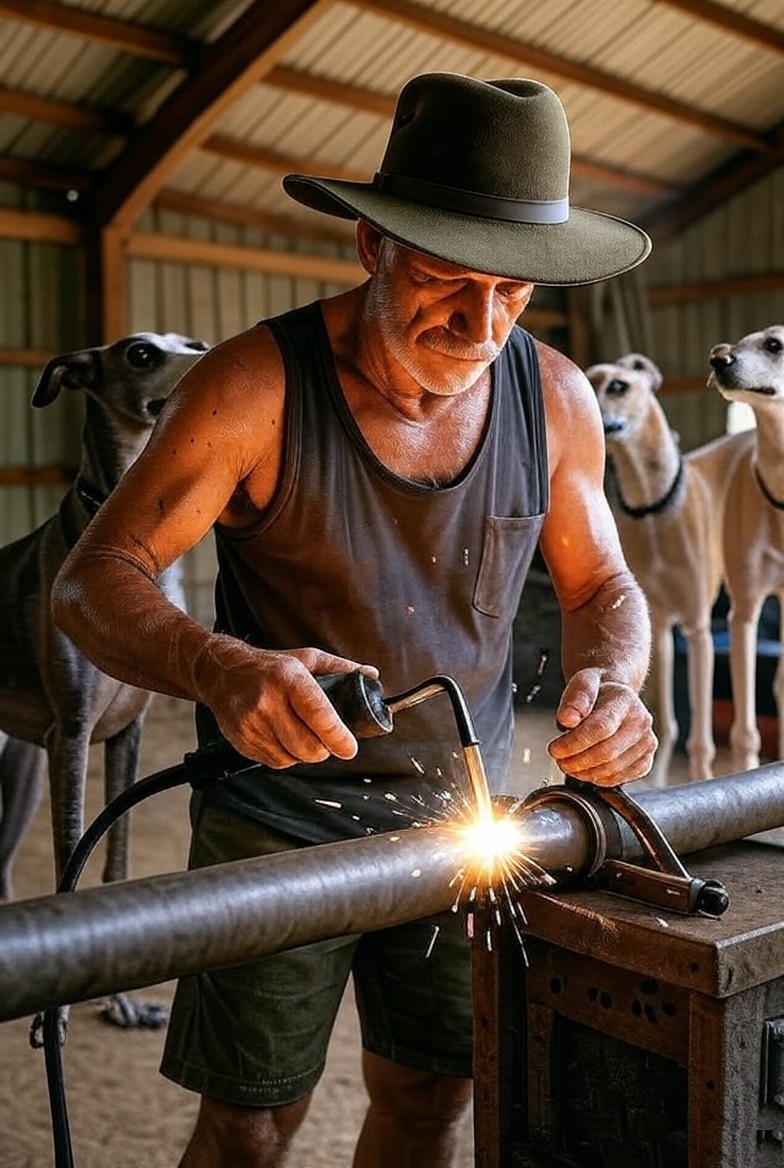
Blair Cottrell: But then he married my grandmother and they came down and bought some property in Pearcedale, which is a bit inland from Frankston but in the same general region. And he built his own greyhound training facility. So he built a big greyhound track at the front of his property. Had about 30 acres. He built a run, a bull ring and had about 100 kennels. And people would come from all over the country to have their greyhounds trained for racing at my grandfather’s facility. He welded all that shit together himself. An entire lure. And you know the lure that the fake rabbit runs on?
Graham Connolly: Yeah, yeah.
Blair Cottrell: He got this metal sheet work and built a track, built a big fence around it and somehow engineered the lure. He’s not qualified to do any of that.
Graham Connolly: They were so good! Those men, …
Blair Cottrell: The sheds, the hundred kennels, the hundred steel kennels with steel Gates. My grandfather somehow welded all that together himself over a period of years. And made a business that made a lot of money. I remember I went to see him just before he sold the property. He recently sold it. And he told me he was making so much money he felt like Santa Claus. I didn’t really know what he meant by that. [chuckling] He wasn’t always that great with his words.
Graham Connolly: He was probably just able to be generous with it, I guess.
Blair Cottrell: Yeah, but he’s in comfortable retirement now.
Graham Connolly: Do you reckon those men, I know, …
Blair Cottrell: They’re a different breed.
Graham Connolly: They seem to have so much more time in their day and I don’t know, …
Blair Cottrell: It’s because they’re working on their own property.
Graham Connolly: Yeah. They don’t have their phone, they don’t have the bloody television, they don’t have the laptop. They don’t have any distractions really.
Blair Cottrell: Give me 20 acres and I won’t need any sort of social media. I won’t need anything. 20 acres with plenty of work to do and an idea in my head and I’ll get up 5 AM every morning, I’ll work on it till dark. And that’s what my grandfather did.
Graham Connolly: And then they had community as well. So if they were busy, if they needed a tool that they didn’t have, didn’t have to have the money to go and buy that tool, they could borrow it from the neighbour.
Blair Cottrell: Yeah.
Graham Connolly: You know, until they get going.
Blair Cottrell: And my old man, I remember my dad’s got three brothers and my dad and his brothers would go over there and give him a hand every now and then when he was still building it up. I remember going as a kid and helping dig holes, post holes that were going to be the fence around the greyhound track in the front paddock. And so yeah, it was all kind of a family made business but everyone’s kind of gone their separate ways, as I said. And I’m not really sure where the wealth’s going to end up.
Graham Connolly: So your dad didn’t have any interest in the greyhounds?
Blair Cottrell: Not necessarily. My dad was, … Greyhound training it’s a brutal business.
Graham Connolly: It is, yeah.
Blair Cottrell: If a dog breaks a leg, it gets shot!
Graham Connolly: Yeah. I’ve got cousins that are into a back home in Ireland.
Blair Cottrell: Yeah.
Graham Connolly: Not to that sort of scale, though.
Blair Cottrell: Right. So you saw how it happens.
Graham Connolly: Yeah, exactly! They love it, though. Like, the people really get into it, don’t they?
Blair Cottrell: There’s a lot of money in it.
Graham Connolly: And it’s like, we love our dogs. And then you add another aspect to your dog. Like you said before, now you got a useful dog, a dog that has a job to do, a dog that, …
Blair Cottrell: Still, I gotta say, if you loved dogs, you probably wouldn’t want to be in greyhound training!
Graham Connolly: Yeah, probably not.
Blair Cottrell: I wouldn’t go as far as saying it’s cruel, but they all live in tight little kennels. They exist only to run and make money for their owners.
Graham Connolly: Yeah.
Blair Cottrell: And as soon as they can’t do that anymore, they generally get shot.
[25:41]
Graham Connolly: Have you noticed a lot of people now are adopting greyhounds?
Blair Cottrell: I’ve noticed that.
Graham Connolly: You know what?
Blair Cottrell: I think it’s a good thing.
Graham Connolly: It is good. But you know what’s funny about it? Greyhounds in Victoria are not allowed off leash at all! Even in off leash parks.
Blair Cottrell: Why is that?
Graham Connolly: I think it’s because they have that drive to chase, rabbits, the lure, and, …
Blair Cottrell: They’ll run over a kid or something?
Graham Connolly: Maybe. I think it’s a bit unfair because they’re the most well trained, disciplined dogs that there is.
Blair Cottrell: They’ve got a great nature.

Graham Connolly: Yeah. And they’re so well trained because it’s pretty cruel, like. And it’s strict to train. So you see people nowadays with a greyhound. If you see people walking a greyhound on a leash, the greyhound is perfect.
Blair Cottrell: Yeah.
Graham Connolly: A greyhound walks perfect on a leash. But it can be deceiving. Because the person that’s walking that greyhound might not be very experienced with dogs at all!
Blair Cottrell: Yeah.
Graham Connolly: But they look like they are. But if something goes, like, if another dog runs up on them. It happened here. One of my dogs got out. And this is when I first had this thought. One of my dogs got, …
Blair Cottrell: With a greyhound?
Graham Connolly: So, yeah, it was a woman walking past here with a greyhound.
Blair Cottrell: Yeah.
Graham Connolly: And I think I was in the shower or something and the door wasn’t closed properly and the dog, but he’s a good dog, so he’s fine. So he ran over. He didn’t do anything. He just ran over and the woman starts screaming!
Blair Cottrell: But that’s what makes the dog act radically.
Graham Connolly: But the dog didn’t because it’s a greyhound!
Blair Cottrell: Right.
Graham Connolly: Because the greyhound is so well trained. The greyhound just knew it was not, … Because as soon as I seen it, by the time I went out, my dog was just sitting because he just went:
“Oh shit, what have I done?”
So he’s sitting, the greyhound is chill as and the woman is screaming to me:
“Get him away! Get him away! Get him away!”
Blair Cottrell: You notice women don’t understand dogs.
Graham Connolly: No, they don’t!
Blair Cottrell: Like they give dogs incessant constant commands. They stress and they scream at the dog and the poor beast doesn’t know what the hell to do. And usually if the dog isn’t well trained, fortunately that greyhound was.
Graham Connolly: Yeah, it was, the greyhound.
Blair Cottrell: Because the woman’s screaming and carrying on, the dog freaks out and ends up behaving worse than it otherwise would.
Graham Connolly: They can go into protective mode. The thing is that greyhound was just so chill, that he knew that my dog wasn’t aggressive either. Like so the greyhound had more sense than the woman.
Blair Cottrell: For me, dogs are easy. They respect strength.
Graham Connolly: They do.
Blair Cottrell: And to a dog, strength is self control, containment.
Graham Connolly: Yeah.
Blair Cottrell: You stay calm, you don’t give the dog a command unless it’s necessary. And you say as little as possible and if he doesn’t listen, you give him a foot in the ass. That’s really simple.
Graham Connolly: Me and Kate takes two dogs for a walk every morning down to Point Henry, right down to the beach to chase rabbits and stuff like that. But every morning the greyhound gets, he gets, … The Dane gets really excited! Really excited!
Blair Cottrell: Your Dane?
Graham Connolly: Yeah, the Dane. And normally I don’t have time. Normally you just wait for five minutes or whatever till the excitement goes out of the dog. Then you go. But what we do is we put the dogs into the back of the van. We got the baby in the seat, one of us is in the back. We just don’t even look at the dog. So the dog’s like excited. Like you don’t even, you don’t say sit down. You don’t. You’re quiet, nothing. And you don’t start the car or else you will start it sometimes, but you don’t move it.
So we will just sit there, sit there, sit there. And after about 30 seconds, or a minute, the dog will do a yawn. And that’s where I’ve seen this, like on the dog training videos. That’s where something, a switch happens in the brain.
Blair Cottrell: They get bored. Yeah.
Graham Connolly: They does this big yawn and then we’ll drive off. And he’s calm.
Blair Cottrell: Yeah, right.
Graham Connolly: It’s crazy!
Blair Cottrell: I have to remember that.
Graham Connolly: You have to wait for the yawn.
Blair Cottrell: Yeah, right.
Graham Connolly: Yeah.
Blair Cottrell: And then they’re ready to go.
Graham Connolly: And then they’re chill.
[29:08]
Blair Cottrell: So what first got you into the, … Would you consider yourself, like, politically. We’ll talk about politics now a little bit.
Graham Connolly: Yeah, why not?
Blair Cottrell: You ready for that?
Graham Connolly: Yep.
Blair Cottrell: Is that allowed?
Graham Connolly: That is allowed.
Blair Cottrell: All right.
Graham Connolly: This is called the Offaly Offensive, after all.
Blair Cottrell: All right, well, we’ll keep it in the realm of offensive. What you would describe yourself as? Nationalists? National Socialist?
Graham Connolly: I would describe myself as a National Socialist, yeah.
Blair Cottrell: Right. So to a lot of people, that’s very heavy. And what’s your understanding of National Socialism?
Graham Connolly: Well, to be honest with you, I’ll tell you how I came to it is that I suppose growing up, I’m the sort of person that always, I didn’t necessarily read too many books. I didn’t necessarily read into all these different ideologies or anything. I just always went with my gut, what I feel is right.
Blair Cottrell: Instinct.
Graham Connolly: Instinct rather than, … And I always even when there was social pressure to say that this is okay or, later in life, it was the gender stuff. Now, that’s radical. But even earlier on, like, I can’t think of any examples off the top of my head, but anything that was sort of been put to me as the socially accepted thing, if it didn’t seem right to me, I would go against it. I was like:
“No, I don’t accept that’s wrong! That’s completely wrong!”
But I didn’t know I was a National Socialist until sort of years later. So for years I just found that I was going more and more and more and more against the grain of society, against what has been sold to me as, this is right. It’s not right!
Blair Cottrell: Like, was there a triggering moment for you, that you remember?
Graham Connolly: Well, eventually I read Mein Kampf. But the reason I read Mein Kampf eventually was because I was being called Nazi so much online and I was defending myself so much. [chuckling] I, like, we all probably went through it. Like, we’re gone through it. I thought I was real clever by going:
“How can I be a Nazi? I’m not a socialist!”
Like, that was my stupid answer. Like, do you know what I mean? I’m not an Nazi. I’m not. This was back when I was denying being a Nazi. I’m still under:
“I’m not a Nazi. Like, this is just what I believe.”
But then it happens so much because what I was doing, I spent an awful lot of years just bickering with people, wasting time online, bickering with people and trying to change people’s mind. Trying to red pill people, as they say.
Blair Cottrell: Yeah.
Graham Connolly: But still not calling myself a National Socialist.
But in hindsight, I always was a National Socialist. I think I was a National Socialist from birth basically. Like just born! Natural law. That’s what I believe in. Like, almost all our things I believe in is natural law, you know, strength, the right of conquest. Like, it all seems obvious to me. When I say “the right of conquest”. Have you ever heard of the right of conquest?
Blair Cottrell: Of course. Yeah. Might is right.
Graham Connolly: Yeah, kind of to an extent. Yeah. The right conquest. The best way I can understand the right of conquest is kind of like similar to how when big ships, like Cook’s fleet arrived in Australia. That would be, I think, the only equivalent nowadays to, … Because people don’t seem to be able to, … They like to look back and try to judge that through today’s eyes. And you can’t do it.
So I think the only way you can really judge that is if you can imagine a spaceship of space aliens that have arrived from bloody the other side of the galaxy or something, and have been traveling for 10,000 years and they are all of a sudden like Independence Day type shit, they just arrive through the fucking clouds.
Blair Cottrell: What are they supposed to do, go:
“Oh, there’s already people here. We’ll just go!”
[chuckling]
Graham Connolly: Exactly! [chuckling] So they arrive all right. What if they’re so far advanced that we’re ants, basically.
Blair Cottrell: If they manage to get here, chances are they would be.
Graham Connolly: Yeah, they’re so far advanced that we’re ants. So, like, it’d be like an ant trying to communicate with me not to walk on his nest, eh?
Blair Cottrell: Right. That’s actually why Stephen. I think it was Stephen Hawking. I won’t attribute it to Stephen Hawking because I’m not really sure, but it was someone of that category of super smart individual. He was against sending radio signals out into space, …
Graham Connolly: For that reason!
Blair Cottrell: For that reason. Because he said:
“Any potential alien civilisation that is advanced enough to receive, interpret and trace those signals back is going to do the same thing to Earth that every European colonist did to every other country.”
Graham Connolly: Yeah, exactly!
Blair Cottrell: It’s the mathematical thing to consider. Yeah.
Graham Connolly: So like I always try to put myself into the mind of a person in that scenario. All right. And you’re here going:
“Well let’s say we tried to communicate with them.”
We tried to go:
“Hey, yeah!”
Like basically like an ant waving at me:
“We’re here! We’re here! What the fuck are you doing?”
Like you know, …
Blair Cottrell: Magnifying glass.
Graham Connolly: Yeah, but maybe they might not even have any malice towards us, because I don’t have any malice towards the ant nest.
Blair Cottrell: No, you don’t.
Graham Connolly: No malice.
Blair Cottrell: You’ll stand on it because you’re bigger.
Graham Connolly: Yeah, it’s just insignificant to me. It just doesn’t even matter, you know what I mean? So there we’re here going basically trying to get their attention. Yeah, but what if they’re so much more powerful they don’t even hear us. Like they’re not even, …
Blair Cottrell: It’s very naive.
Graham Connolly: So now we have a choice, don’t we? We have a choice that we can either., … What are you gonna bloody roll over and die? Are you gonna just survive in this new reality?
Blair Cottrell: Do you believe in aliens? Do you think they real?
[34:08]
Graham Connolly: Yeah, I do.
Blair Cottrell: What kind of aliens do you believe in?
Graham Connolly: All kinds, I think because it’s just like, …
Blair Cottrell: Do you think they have influence over Earth now or?
Graham Connolly: Oh, let’s see, that’s a real, … That’s an interesting question.
Blair Cottrell: It’s something that I’ve thought about but I haven’t been able to draw a conclusion.
Graham Connolly: I won’t be able to draw a conclusion, either.
Blair Cottrell: It feels like it would make sense if you consider that every different species of humanity is being pitted against each other.
Graham Connolly: Yeah.
Blair Cottrell: With a common enemy.
Graham Connolly: Yeah.
Blair Cottrell: And we as a species will actually tear each other apart and downgrade ourselves in the process.
Graham Connolly: It’s almost like “zoo hypothesis” they call it.
Blair Cottrell: Well before an enemy, before an invader comes into a foreign territory, it’s in the invaders interests to weaken that territory. Military structure, government, as much as possible, have it as divided as possible so it’s ready to be conquered easily. And it almost feels like that’s what’s happening here on Earth, doesn’t it?
Graham Connolly: Well, like South Park did a, I think it was South Park. Maybe it was one of these ones did a episode which basically like Earth was like a zoo.
And it was just like a TV show. Like, so there’s aliens up there watching like the Truman Show. And it’s just like they just put all these different species, like, so lions are from a planet, tigers are from a planet.
Blair Cottrell: They just put them all and they, …
Graham Connolly: Just like took them all and just dumped them here!
Blair Cottrell: Every time there’s a major crisis, or a war, more unidentified flying objects are apparently reported. And that could be the camera crews, you know, … [chuckling]
Graham Connolly: Literally. [chuckling] Who knows? Like, honestly, it could be this whole scenario of like, we’re just ants, like, what do we know? But I don’t know. Like, there is the other flip of the kind in the fact that the size of the universe is almost like that. Like, let’s say we had a telescope that could look sort of anywhere within our own galaxy, never even mind all the other galaxies, because it’s just, even, that is just so vast and big to try and imagine it.
But let’s say we could like zoom in on every, like zoom in properly and actually focus and see what’s going on there. Let’s say you look halfway to the other side of the galaxy. I forget what size the Milky Way is, but it’s bloody, …
Blair Cottrell: It’s probably unfathomable anyways.
Graham Connolly: Well, by the time you zoom in there, the light from that place could have taken a million years to travel here.
Blair Cottrell: All right, so you could see the past.
Graham Connolly: So what you’re seeing is a million years in the past. So even if there was, it’s just the timing is, it’s mind boggling!
Blair Cottrell: I was about to say the same phrase, mind boggling! It’s too much for any one man to even consider or think about really. The universe!
Graham Connolly: It is fun to think about though, but it’s mind boggling! It’s hard to know. So to think about only 20 or 30 years ago, like, we’d look up at an Andromeda, which is the next closest galaxy to us, and it was just another star in the sky. And then one day we were able, we had a telescope that was able to resolve that and realise, oh shit!
Blair Cottrell: But even our own planet is a mystery. Have you heard about the inner Earth?
Graham Connolly: I have, yeah.
Blair Cottrell: What do you think about that? Are you sold on it or not really?
Graham Connolly: No, [chuckling] I’m not sold on it. I’m definitely not sold on the inner Earth!
Blair Cottrell: But on the Agatha, like?
Graham Connolly: Yeah. Your man Bird, isn’t it? Is. Wasn’t that his name?
Blair Cottrell: Admirable Bird.
Graham Connolly: Admiral Bird.
Blair Cottrell: This is the guy who flew over the North Pole and apparently went inside the Earth.
Graham Connolly: That is interesting. It is interesting.
Blair Cottrell: There’s been some people who have, how do you say, debunked that they reckon that he didn’t actually write that in his diary.
Graham Connolly: Ah!
Blair Cottrell: Someone said he wrote it in his diary, or someone said he told the story and then it became he wrote it in his diary. But he didn’t. But I’m not sure. Don’t quote me on that.
Graham Connolly: Yeah. No, I don’t think I buy that one, to be honest. I, …
Blair Cottrell: There’s still a lot going on about Earth that doesn’t necessarily make sense. Yeah.
Graham Connolly: I’m a bit of a Simulation Theory advocate, to be honest.
Blair Cottrell: What do you mean by that?
Graham Connolly: We’re in a simulation.
Blair Cottrell: Oh, the “simulation”. I thought you said “assimilation”. I thought you were against assimilation! [chuckling]
Graham Connolly: Definitely! [chuckling] No, I think there’s good possibility it’s a simulation, I think.
Blair Cottrell: What makes you think that? And if the audience doesn’t know simulation theory, most people probably would know is the theory that we’re living in a computer simulation. That this is not real life, so to speak. It’s real to us as far as we understand what real is.
Graham Connolly: Yeah. And it doesn’t even matter if it is a simulation because you’ve got to live by the rules of the simulation anyway. So you still got to go and live your life!
[38:29]
Blair Cottrell: Do you think it’s possible to bend the rules like Neo in the Matrix?
Graham Connolly: I think to an extent it probably is. And that’s where you know how people talk about manifestation and the laws of attraction and stuff like that. I think that’s the kind of thing. For example, the more you victimize yourself, the more of a victim you will be, sort of thing.
Blair Cottrell: Yeah, you make it a reality by thinking about it.
Graham Connolly: You make your reality by thinking about it.
Blair Cottrell: Don’t you think that that could just be the power of the mind though? Like, naturally, for example, I’m gonna think all day about a bowl of nuts that I want to eat. Then on the way home from the shop, I’m probably going to pull in to buy some nuts and then when I get home, I’m going to pull a bowl out and then I’m going to put the nuts in the bowl, I’m going to eat them. That’s because I’ve thought about it all day. So it’s more that you’re motivating yourself to it.

Graham Connolly: You could that you’ve programmed it into the simulation. [chuckling]
Blair Cottrell: Right, right, right.
Graham Connolly: But I don’t know. Yeah, look, it’s a, there’s an awful lot going on that we don’t know. I think that’s what wisdom is though, is knowing how little we actually know.
Blair Cottrell: It’s also being able to entertain the possibility of something without accepting it. And I think that’s an important thing.
A lot of people don’t seem to be able to do that, interestingly. Which I really like to wonder about things like, what if this is true and what if that is true?
Graham Connolly: Yeah.
Blair Cottrell: And being able to, with a sober mind, just observe what’s in front of you and consider the possibilities without falling too much into belief.
Graham Connolly: Yeah. What do you think? Do you believe in aliens?
Blair Cottrell: I just don’t know.
Graham Connolly: You don’t know either.
Blair Cottrell: For all I know, we could be the aliens.
Graham Connolly: Definitely could be. Have you heard the theory that, what is it, is it? I don’t know which one it is. There’s so many theories out there. But one of the theories is that an alien species came down and they took basically the most advanced primate on the planet. So let’s say we were monkeys basically at the time. Well, or great apes, similar to chimpanzees, but a little bit more smarter than chimpanzees, higher IQ than chimpanzees. And they took us and then they just kick started our evolution by like 2 million years or something.
Blair Cottrell: I’ve heard it. And it does, it makes sense that we’re a somewhat bastardized species because we break down pretty early, we wear out, we probably should live longer. And there’s some evidence that we did used to live a lot longer and grow a lot taller. And so we could be a bastardized version of what we were once created to be.
I do tend to lean towards creationism. Meaning it seems like something made us.
Graham Connolly: Yeah.
Blair Cottrell: For a specific purpose perhaps. Or maybe just because it could
Graham Connolly: Well I tend to lean towards creationism when it comes to the entire simulation, let’s say. But that’s kind of what this comes back to. Simulation Theory, comes back to for me as well. Is the whole thing created?
Blair Cottrell: Genetically though, it doesn’t make sense that we’re from this planet.
Graham Connolly: I agree. Why do you think that?
Blair Cottrell: Well, there’s multiple reasons. I’m driving down the street and the sun’s in my face and I can’t see! I need to put specially made glasses with polarisation lenses so I can see properly. And even then it’s kind of hard. And I’m thinking:
“If we developed on this planet, shouldn’t I be able to stand the sun glare?”
No, I can’t! I cant’t even walk outside on this planet without specially designed protective footwear. Yeah, we need specially built shelters with temperature control so we don’t freeze to death or get too hot and die of heat stroke.
[Hmm, abos manage without shoes, sunnies, clothes, etc.]
Graham Connolly: And then you take my dogs. Yeah, I can bring them out to the outback. I can bring them up to the snow. I can bring them to, …
Blair Cottrell: Every species on this planet has thick hide, fur, scales, feathers, and we’ve just got this fragile pink skin. If we stay out too long in the elements, we die!
Graham Connolly: We can’t deal with the cold, we can’t deal with the heat.
Blair Cottrell: But we evolved here and adapted to the environment? Doesn’t seem like we did! [chuckling]
Graham Connolly: Strange.
Blair Cottrell: So where are we? I think we’re from somewhere further out from the sun, possibly a bit cooler and not as harsh. Possibly somewhere with less gravity too. A smaller planet.
Graham Connolly: But then in a funny way, we can’t deal with the cold either.
Blair Cottrell: Yeah, that’s right. Oh, well, we, …
Graham Connolly: So maybe it was similar, that was, …
Blair Cottrell: We can deal with it. We could deal with a bit colder. It depends on where you are on the planet. Yeah.
Graham Connolly: Except if you take away your claws and your ability to heat.
Blair Cottrell: Oh, it might be that this particular solar system and this sun is just kind of extreme.
Graham Connolly: Yeah, it could be, yeah.
Blair Cottrell: But also the gravity is, …
[42:43]
Graham Connolly: There were Red Dwarf suns that would give off less heat and stuff like that, but then the flare more, so they sterilise their systems. So but yeah, who knows, man?
Blair Cottrell: I still believe obviously in a form of ethnic nationalism though, where despite the potential bastardisation of our species, I think we still do have to preserve and elevate ourselves the best of us. I think the greatest purpose in life, despite what you might believe, is to produce children that are smarter and healthier than you are.
Graham Connolly: I agree with that.
Blair Cottrell: I don’t really see any., … For us mortals as individuals, I don’t think there’s a greater purpose in life than that.
Graham Connolly: Well, why do we do it with horses?
Blair Cottrell: And that’s right. Hitler writes about that inMein Kampf. You might have read it. He said:
“We’ll put all this effort and finance into breeding the best racehorses, genetically speaking. But then we bastardize our own species because any form of genetic consideration would be inhuman.”
It doesn’t make any sense!
Graham Connolly: Doesn’t make any sense.
Blair Cottrell: You think would put more thought into breeding better humans rather than better racehorses. But we don’t do that. Because that’s offensive. [chuckling] I don’t see why that’s offensive. I’ve never understood.
Graham Connolly: I don’t, either. No. What do they call it? Eugenics.
Blair Cottrell: Yeah. I suppose it’s a form of eugenics to consider, but.
Graham Connolly: So why is that inherently evil though?
Blair Cottrell: But people do it anyway without realizing it.
Graham Connolly: Of course they do!
Blair Cottrell: Women especially women are very selective about who they are going to breed with. Because they’re trying to breed up even if they don’t realise it.
Graham Connolly: Yeah.
Blair Cottrell: And they’ll sometimes make a decision based on [word unclear]
Graham Connolly: But nowadays, do you think that’s changed a bit in that they’re breeding for like, the ability for men to have money can skew that. Can skew that genetic, …
Blair Cottrell: It’s confused the situation for women. It’s unusual that you’ll find a man that has a lot of money but is also playing the standard role of protector slash predator that they’re so interested in.
And so this is why it’s so often the case that women who settle down or marry very wealthy men who are goody, goody two shoes, do as they’re told. If that’s the way you want to see wealthy men. Not all wealthy men are like that. But let’s say for argument’s sake, more often than not a guy who’s making a lot of money is going to be, he’s gone to university. He’s thinking a lot about money. He’s thinking a lot about staying within the system as a reputable man. So often women will cheat on men like that, even if they’re married to them with criminals. They’ll go down the hill and have their fun and then go back to their husbands and they won’t talk about it. I think there’s a confusion there as a result of wealth, a great deal of wealth producing higher status men who otherwise wouldn’t have status without wealth.
Graham Connolly: Higher status. Yeah. They’re higher status for not genetic reasons.
Blair Cottrell: Well, women are primarily, as far as I understand, more attracted to status than anything else.
Because even if you consider that the woman is going to go for the strong man or the warrior who’s going to be able to protect her and her family, the man of higher status who has influence over potentially a hundred fighting men is safer to be with for that reason. Right.
Graham Connolly: Yes.
Blair Cottrell: And women are primarily geared to live a safe life and they’re going to be safer with not only the warrior or the fighter, but the man who has influence over a small army.
Graham Connolly: Yeah.
Blair Cottrell: Right. So that’s why women like status. But they’re confused now, as I said, because of the money situation, providing status to men who otherwise wouldn’t have it.
Graham Connolly: Yeah. So back into there, a man earned status by beating other men in battle or, …
Blair Cottrell: Not just that, but by being respected by other men, followed and admired by other men. Not just for his mercantile skills and money making skills, because he was actually a respectable, dutiful, honourable man.
Graham Connolly: Yeah.
Blair Cottrell: Who would give people the chance. But if they wronged him, he would be brutal in response. Right. And men respected him for that reason. They followed him and he’d build a hold fast. And suddenly you’ve got this lord and landowner who has a choice of spouses. And I think that’s the way it went for thousands of years.
Graham Connolly: What? That’s actually an interesting point that you make about how there used to be repercussions for wronging another man, even just in a even just in a very slight way.
Blair Cottrell: Well, there’s dueling. Like if you didn’t like what someone said about you could challenge them to a duel. And if you wanted to stay or maintain your reputation in society, you had to accept the jewel and someone was going to die. So that actually kept men in check.
There’s a saying that civilised men are more rude to each other. I don’t know how the wording of the phrase goes exactly, but savages are more dignified in the way they talk to each other because they know they’re risking having their skulls split if they’re not polite!
Graham Connolly: Yeah.
[47:05]
Blair Cottrell: Whereas civilised men, who are more pacifists, are going to be absolutely ruthless, stabbing each other in the back, stealing from each other and doing everything they can to crawl over the top of each other because they feel like there’s no physical consequence.
Graham Connolly: Yeah. Have you heard, I don’t know if it’s a theory, but basically that the whole point of police and the justice system is to take away your obligation to seek revenge.
So, for example, if somebody was to wrong you by hurting your wife or your mother or something like that. Right. Normally back in the day, you would seek revenge, and then their family might seek revenge on you, and you get this tit for tat, tit for tat going on. And the whole point, the justice system is supposed to take that obligation from you. This was supposed to do. It’s supposed to take the obligation from you so that you can punish that person. And it stops there. Boom! That’s the idea behind it.
Blair Cottrell: Well, it has other obligations now.
Graham Connolly: Yeah. But that obligation seems to be gone now.
Blair Cottrell: More or less. Like I sought revenge in a relationship that went wrong when I was young, which landed me in jail, and the justice system intervened and sort of kind of showed me a better way.
So it was good to me in that regard. But I gotta tell you, ever since I got involved in politics, I haven’t really seen much justice after that. I mean, you might know I headed up United Patriots Front.
Graham Connolly: Yes.
Blair Cottrell: And I started that up with a bunch of other guys in 2015.
Graham Connolly: Yeah.
Blair Cottrell: And that was a new phenomenon at the time.
Graham Connolly: That grew fast!
Blair Cottrell: It was huge!
Graham Connolly: Why do you think that grew so fast?
Blair Cottrell: I think it’s because social media at the time hadn’t really been used to promote a populist protest group that was nationalistic in essence, or patriotic in its foundations.
And also because I think I was relatable, I think the average Australian was able to resonate with me. And the amount of views we used to get on Facebook, I can see why certain elements of society, you know, government, police, were very nervous. Because I could hold my phone up to my face and film myself talking about a Muslim migrant who just shot someone in Parramatta [Sydney suburb/subcity] and this is why we need to stop Islamic immigration, for example. And that video would get millions of views! Millions of views! Amazing amount of reach! More reach than Channel 9, 7 and 10 would get on social media put together.
Graham Connolly: You moved so fast that time that they almost couldn’t ban you quick enough! The likes of Facebook and that you survived long enough on Facebook to get these millions and millions of views.
Blair Cottrell: Well, if you want to ask the question, like, what was that actually put a stop to the United Patriots Front? How was it?
Graham Connolly: That was actually where I was coming at next. Yes.
Blair Cottrell: Yeah.
Graham Connolly: Like, how did it? The rise of UPF, though, was crazy to me. Like, why do you think it was so successful? Like, why do you think, …
Blair Cottrell: It was new. It was right place, right time. I was involved in it. I knew what I was doing.
Graham Connolly: Yeah.
Blair Cottrell: I was always a bit of an ideologue, propagandist.
Graham Connolly: Did you do anything before UPF?
Blair Cottrell: No.
Graham Connolly: How did you know what you were doing? I guess is the, …
Blair Cottrell: It was a combination of intuition and reading about people. I’ve always been interested in people, since I was young. Spent a lot of time in my own head thinking about how people, what makes people tick and how to speak to them. And I learnt how to communicate, not necessarily complex, but multifaceted politics to people in a way they would understand it. Right. I knew that people needed to, … People can always be told the truth! They just need to be told in a way they can understand. It needs to be simplified for them. Right. It’s not necessarily because people are stupid. They’re just mentally lazy. So they need someone to do the explaining for them. They need someone to do the research for them and then lay it out on the table in a way that’s easy to understand.
Graham Connolly: Do you think they also have to feel like it’s okay to accept the truth, that you’re representing them?
Blair Cottrell: Of course. But I think that’s why I was a good person to communicate the truth to people back in the days of UPF. Because I was a regular worker. I was carpenter. I was one of the people. I was working class. And there was really nothing about me that set me apart from the standard Aussie.
Graham Connolly: So you were a carpenter?
Blair Cottrell: I did an apprenticeship with my uncle when I started when I was 15. Finished when I was 19. Yeah.
Graham Connolly: What sort of carpentry work did you do at the time?
Blair Cottrell: All kinds. My uncle was a builder, residential builder. So I did house frames, lockups, fixes.
Graham Connolly: Yep.
[51:44]
Blair Cottrell: Small extensions and new homes, all sorts of stuff. But because he was a builder, he really used to push us. We would do a bit of bricklaying, we do a bit of plastering. We’d do a lot of overtime, bit of unpaid overtime for character building! You would call it. [chuckling] Because I was young when I started my apprenticeship, I used to ask my uncle:
“How am I getting home tonight?”
Because I couldn’t drive. I was too young to legally drive home.
Graham Connolly: Well you started when you’re 16 or something?
Blair Cottrell: 15 I started. 15, yeah. And he was going in the opposite direction so I’d ask him how I’m getting home. He’d say:
“You can piss in the gutter and swim!”
[Graham laughs]
So I used to throw my nail bag over my shoulder and do two hour walk home from the job site. Wouldn’t get home until, you know, 8 o’ clock at night sometimes, and I’d still go to the gym. My teenage years were very difficult but I’m grateful for it because it gave me perspective. It sort of worked the weakness out of me because I was a sook of a kid until I started work.
Graham Connolly: Really?
Blair Cottrell: Yeah. I was really over sensitive and I loved my mother a bit too much and used to spend a lot of time around mum. Dad was always at work and mum was very good to me. So I was probably over sensitive until I had that worked out of me from the age of 15.
Graham Connolly: What did your dad work at?
Blair Cottrell: My dad was a supervisor for a construction company in the city.
Graham Connolly: Right.
Blair Cottrell: But he used to do, …
Graham Connolly: Did he have a trade himself?
Blair Cottrell: I don’t think he did. But because he started with the company young and he stayed with the same company for over 40 years, he did quite well.
Graham Connolly: Man. Being the son of a, … Because I see it nowadays, even the guys who work trade. Trade guys work six days a week, man! Yeah.
Blair Cottrell: It’s a full-time job. It’s a lifestyle.
Graham Connolly: It is a lifestyle. Exactly!
Blair Cottrell: Your car becomes like a mobile business. You live out of it, you eat out of it.
Graham Connolly: Yeah.
Blair Cottrell: Everything in the back.
Graham Connolly: And I mean they probably didn’t even get RDOs back, … Like they get RDOs now which is like, …
Blair Cottrell: You’re working in the city on a union job, you get an RDO*.
[* RDO stands for ‘rostered day off’. It is a scheduled day off that employees earn by working extra hours over their standard work hours. They are often accumulated through extended shifts or by working additional hours over a set period, such as a fortnight, or a month. RDOs are part of flexible work arrangements that allow employees to take a day off in exchange for working additional hours over a certain period.]
Graham Connolly: Yeah.
Blair Cottrell: And we’ll talk about unions a little bit.
Graham Connolly: I was going to get to that later as well. Yeah.
Blair Cottrell: But going back to UPF and to answer your question, the original question you asked, why I think it took off was just because it was new and right place, right time.
Graham Connolly: Yeah. Because you did just mentioned unions. Did you have troubles with the unions? Or did you seen how the unions operated, lead to UPF or lead to an awakening for you? What led you to want to start the UPF, or to want to do this?
Blair Cottrell: The unions didn’t have much to do with my ideology, really. And I wasn’t necessarily motivated so much by ideology as I was, by results. I wanted to create a popular counterculture against this whole mass immigration multicultural project.
And once the government or elements of government worked out that I knew what I was doing, and that I was against them, they took the necessary steps to shut the UPF down! And how they did that is interesting. Right. Have you heard of counterinsurgency?
Graham Connolly: Yeah.
Blair Cottrell: You have? If the viewer doesn’t know what that is, it’s almost a method of warfare that was developed by US Army primarily, initially, to deal with insurgent groups, which were rebel Muslim groups in Iraq and Afghanistan during the War on Terror.
The primary purpose of counterinsurgency is to “isolate and disrupt”. Okay. Because the army figured out if they just killed these Muslim groups, members of people who were suspected of being members of rebel terror groups in Afghanistan, for example, if they just killed them, more members of the public would actually start joining the oppressed Muslims or the terrorists because they got angry at how the army was actually treating them.
And so they realised they had to create a different strategy. And they created counterinsurgency. Isolate and disrupt! Right. And nothing the government does these days is really new. Because the people in government right now, they’re not very creative or thoughtful. They just basically repurpose solutions that have worked well on other problems through recent history. Like, if you think about Hollywood, no one’s coming up with new ideas these days. They’re just repurposing and recycling old ideas to try to get the same result they used to get.
And the government’s doing the same thing with political dissidents, both individuals and groups in Australia. And it began with me. Okay. I was the first person in Australia to have my bank accounts disappear. I was the first person in Australia to be charged with what was essentially a thought crime for a Facebook post. I was in court for almost three years fighting a charge for “intent to incite ridicule” in a Facebook post.
Graham Connolly: Crazy, isn’t it?
Blair Cottrell: I was the first person to, …
Graham Connolly: Could I go back a step?
Blair Cottrell: Yeah.
Graham Connolly: How did you get red pilled? How did you get to this stage?
Blair Cottrell: I’ll get to that. Let me finish, this is a good point.
Graham Connolly: Okay.
[56:22]
Blair Cottrell: So my motivations, I’ll explain after this. But I was also the first person to be blacklisted from all social media. To this day, try to type my name into Facebook or Instagram. You’ll get a warning:
“This is a dangerous individual. Are you sure you want to continue?”
And you used to not get the option to continue a few years ago. They only added that recently. Right.
So this is all an example of repurposed counterinsurgency, which operates within the Australian government right now! This isn’t a conspiracy. They’re called Countering Violent Extremism, or CVE. And their job is to create this layer of plausible deniability for isolating and disrupting dissidents and critics of the Australian government and its policies.
What do I mean by that? Well, this is what the American government did to deal with, or the American army, rather, the US Army, to deal with the terror groups overseas. They had to make it look like the people were turning against the terror groups and they had to make it look like it was happening organically, that they weren’t actually responsible for it. Because for any insurgent group. When I say “isolate and disrupt”, well, what does that, what does that mean for you guys?
For example, you’re a member of a far-Right group, nationalist group in Australia. Your primary resource is not weapons, it’s not information, intelligence. Your primary resource is the people of Australia.
Graham Connolly: Correct.
Blair Cottrell: Right.
So the job of Countering Violent Extremism is to cut you off from the people of Australia! To stop you communicating with them. Internet censorship! And to stop you raising money from them. Bank account closures! To isolate you from the people, because the people provide you with manpower, financial resources and other resources that are essential to you as a dissident group.
So there are elements in the Australian government right now designed to cut you off from that, but they can deny that they’re doing it. Social media is censoring you:
“Oh, that’s the social media companies. It’s not us!”
It’s the CVE department, Countering Violent Extremism department within the government that’s directing the social media companies to ban you guys. And me too, still. Yeah, but they’ll say:
“Oh, it’s out of our hands. That’s a social media thing. Community guidelines.”
Something like that. Bank accounts getting closed:
“That’s a banking issue. Contact your bank. That’s not us.”
Graham Connolly: Yeah, exactly!
Blair Cottrell: What else was the other thing?
Graham Connolly: They just decide to close your account, you know?
Blair Cottrell: Yeah, that’s right. The police are setting you up for charges. They’re raiding you on no evidence. They’re trying to put you in jail:
“That’s a police matter. That’s not us.”
Graham Connolly: They use some sort of like money laundering, …
Blair Cottrell: Like, it makes it look like all of these independent agencies are turning against you on their own. They’re not! The Government’s directing them to do it!
Graham Connolly: Yeah.
Blair Cottrell: It’s vicious corruption! It is what I’m saying in essence, and I’ll finish my point with this, because I know I’ve been talking about it for a while now, is., …
Graham Connolly: Take your time, keep going.
Blair Cottrell: There’s a government department which is repurposed counterinsurgency, which is treating critics of the government, both individuals and groups, especially organised groups, treating them as insurgents or terrorists! Right. So their job is to isolate and disrupt! And they’ll do anything to achieve their goals!
Graham Connolly: So I’m an insurgent? From the different perspective of this group?
Blair Cottrell: You are. And you’re being targeted, myself as well, we’re being targeted by organised counterinsurgency. They’re called Countering Violent Extremism. But they’re just the counterinsurgency department in the government, which exists purely to isolate and disrupt dissidents.
Graham Connolly: Crazy, isn’t it?
Blair Cottrell: Crazy! But it’s happening.
Graham Connolly: Like, I mean, there’s plenty of violent extremism on the Left. In fact, it’s almost the only place that there’s violent extremism. But they’re not countering that.
Blair Cottrell: There’s probably certain departments that supervise them or oversee what the Leftists are doing to try to make it look like it’s even, but it’s not.
Graham Connolly: Absolutely!
Blair Cottrell: I don’t think I’ve seen any Leftist groups experience the same sort of government intervention.
Graham Connolly: And Tim [Lutze] made this point. Not unless they are protesting the gun shows or the Gun Experts Expo or something like that. And then they go hard on them.
Blair Cottrell: Maybe a little bit.
Graham Connolly: That’s it!
Blair Cottrell: It’s still not as hard as what we, …
But to answer your question about what actually shut down the UPF. It’s what I just explained.
Graham Connolly: Yeah.
Blair Cottrell: The counterinsurgency department within the Australian government called CVE, that was basically developed in response to me and the UPF.
Graham Connolly: That was like such a grassroots movement, wasn’t it? Like, you didn’t really have structures in place. So what Tom is trying to build now is kind of, I would say, on the back of what lessons he may have learnt from what you did there with the UPF and stuff.
Blair Cottrell: Very much.
Graham Connolly: Like, it just goes to show that you laid the foundation back then, that has led to almost everything we see today with us on the steps of Parliament dressed in black and stuff like that. Like, literally, you laid the foundation for it back then.
Blair Cottrell: Tom’s a very observant, smart guy. And he’s prophetic in a lot of ways.
Graham Connolly: Yeah.
Blair Cottrell: But what he’s dealing with, what we’re all still dealing with, but especially him, is a different threshold of political policing.
Graham Connolly: Yeah.
Blair Cottrell: One that I haven’t seen before.
Graham Connolly: I don’t think anything that happens with Tom is an accident from. Even from his own perspective. Like you say, he’s so intuitive. I don’t think anything’s as rash as it might seem sometimes. Everything seems well planned out to me.
Blair Cottrell: There’s maybe one or two rash things here and there.
Graham Connolly: Yeah. Here and there. But in general, the greater, he sees the big picture.
Blair Cottrell: He makes it work for him.
[1:01:41]
Graham Connolly: He does. Yeah, he does.
And I think he learnt a lot of lessons from you. And that’s why he’s started trying to create these structures. Like, you see a lot of the stuff we do nowadays with our nationals events. Like we basically have a calendar now. It’s almost like a whole new culture that he’s trying to build, but with structures in place, with leaders in place, with all these things, anti-fragility kind of, …
Blair Cottrell: He’s more organised than I ever was.
Graham Connolly: That’s because that was just a pop up, almost.
Blair Cottrell: What he learnt from me was to just never give up and to keep your chin up no matter what! No matter what they throw at you, no matter what they do, no matter what they say, just keep moving forward.
Graham Connolly: You released a video recently where it was like. I would call it a tribute to Tom, basically, where you talked about Tom and who he is and how what you know about him.
Blair Cottrell: That’s only scratching the surface. There’s so much more.
Graham Connolly: Right. That’s because I mentioned it to you and you were like:
“Fuck, I actually forgot loads of things and all!”
But I actually thought the video was perfect. It was perfect lens. It was perfect. And it just really hit the nail in the head about Tom, the kind of person that he is.
But if you want, do you want to say anything that you think you missed in that video that you wish you had said?
Blair Cottrell: Oh, about Tom Sewell. Tom and I have spent years together as good mates.
Graham Connolly: Yeah.
Blair Cottrell: He was the first person I met when I began speaking publicly, you know, giving my speeches about government corruption, the Leftists, all that kind of stuff. He filmed my first ever speech. I think it was in April of 2015.
Graham Connolly: Yeah.
Blair Cottrell: Federation Square. And from then on, I never met anyone who was more of a soldier for nationalism. I mean, this guy just showed up to everything. And for the first couple of years, he didn’t say much. Funnily enough he says a lot now.
But for the first couple of years, Tom was just watching. And I didn’t realise back then, but now that I think about it now, in hindsight, he was just a sponge. He was listening to everything I was saying, he was watching everything we were doing, and he was just absorbing all of it!
Graham Connolly: It’s almost like lurking. Have you heard there’s a phrase on, like the online Right-wing sphere. There was a phrase that was always like, so saying a new guy come into like a forum or something, and he talked too much and he’d say the wrong things and he’d talk shit, like, say the wrong things, whatever. And the phrase was “lurk more faggot!” And it became a meme. [chuckling]
Blair Cottrell: If you lurk, you learn.
Graham Connolly: Yeah, like, and then it became a meme, like, I was on one of these forums and I didn’t say anything for months, not a single thing. And next thing I said my first comment and I was like:
“Look, I haven’t talked much and blah, blah!”
And the first comment back to me was:
“There’s honour in lurk more faggot!”
Like, [chuckling] so it was like literally complimenting me for having lurked. Like, that was the first time I got introduced to this word, this phrase, lurk more faggot! So Tom was basically lurk more faggot in real life! [chuckling]
Blair Cottrell: To an extent he was still dedicated. He was still a bit of an ideas man. I mean, we used to have long talks. We used to drive up to Sydney together to attend, and Canberra, to attend some of our protests that we hosted up there. And we had long chats. Thinking back to it, I think it was mostly me talking. Whereas these days it’s the opposite. If we’re going for a long drive now, he’s the one I’m learning from him. [chuckling] It’s so funny how he’s developed into a person who was once kind of a protege of mine, maybe, and now I’m the one seemingly learning from him. It’s like he’s evolved into this different sort of threshold of understanding. And yeah, I’m really proud that, … I’m just proud to know the guy. And it’s rough that he’s in jail.

Graham Connolly: You said to me, we talked a couple of weeks ago and you said to me they had like a little bit of guilt or something. You almost felt some guilt in that he’s in jail and that maybe if he’d never met me, or maybe that’s not the words you use, but it was, …
Blair Cottrell: I do think that.
Graham Connolly: Something along those lines.
Blair Cottrell: It might just be a cynical thought process.
Graham Connolly: Of course it is. And we all have it. It’s a natural. I think it’s a natural thing. I thought about it after, and I think it is a natural thing.
But also, he’s Tom Sewell!
[1:05:51]
Blair Cottrell: I think he would have gone for nationalism if we didn’t meet, like, whether we met or not, I think he would have ended up on that trajectory anyway, because he was already networking with people online, and that’s how he first met me. He just saw me posting on Facebook about going to this rally.
Graham Connolly: I think there’s so many people in the world, though, that never become who they’re meant to be. And I don’t think he can say that about Tom. If you look at Tom as a whole and look at what he does and look at, …
Blair Cottrell: But he tried, all he wanted to do, and this was the point I was making with the video that you’re talking about, where I spoke a little bit about Tom’s history. All he’s ever wanted to do is help people.
Graham Connolly: Yeah.
Blair Cottrell: That’s all he’s tried to do! He was good at helping people in the army. He figured that out. And so he left the army to help his old man out. Not even because he wanted to, really. And then once his old man was all good, he wanted to become a fire-fighter. You know, they told him, no. Everything I said in the video was true. Then he ends up working with disadvantaged children, but they kick him out because he’s got the wrong views.
And then he sets up a men’s club. He literally, with the payout he got. Because he got a discrimination payout after he was kicked out of whatever department he was working for when he was looking after kids and that. He got a 10 or $15,000 payout for discrimination. He spent it all on renting out a facility and filling it full of gym equipment and setting up a space to provide for other men who would experience similar discrimination. And that became Lads Society.
Graham Connolly: Yeah.
Blair Cottrell: And it got attacked! It was in the newspapers. I was a member of that for a while as well. And then out of that, he developed a National Socialist group because he saw that was his only choice as a result of all the harassment and targeted, you know, discrimination that he was still experiencing. And all he was doing, all he was trying to do from the start was help young guys out.
Graham Connolly: The man had so much integrity that the path was almost inevitable. You keep pushing a man like that, he’s not going to bend on his morals or his honour or his integrity. He’s just not going to do it. So you keep pushing another step, another step, another step and he’s just going to keep reacting to what they’re doing to him.
Blair Cottrell: Yeah, that’s not always a good thing, but there is still honour in the personage of Tom Sewell and how he handles things.
Graham Connolly: Yeah.
Blair Cottrell: I’m just concerned, as you are too, I’m sure, about the threshold of political policing right now! I haven’t seen anything like it. I mean, people getting raided on no evidence for stuff they obviously haven’t done, set up on charges, just either put them in jail or to get them on bail conditions where they can’t protest. They can’t associate. The political policing in Australia right now is really hectic and, yeah, it’s concerning.
Graham Connolly: Yeah.
Blair Cottrell: Yeah. I’m not really sure what to do about it, [chuckling] to be honest.
Graham Connolly: I joked recently because Jacob [Hersant] gave an interview outside court. They actually refused to let us in, we were in supporting Tom in court. And then we went for lunch, broke for lunch and we went down to the local cafe, had some coffee and on the way back up they blocked us all, wouldn’t let us into the courtroom.
Blair Cottrell: Right.
Graham Connolly: To support them, like, it’s, …
Blair Cottrell: That’s been happening more and more now.
Graham Connolly: Yeah.
Blair Cottrell: Because I don’t think they want it to be known that that much support is behind someone that they’re trying to set up and put in jail.
Graham Connolly: They’re trying to isolate him and it’s despicable to me! But Jacob was giving an interview to the media and I was like:
“You should say., …”
But I didn’t think of it afterwards. I was like:
“The next time you’re giving an interview, you should say, ‘I can’t give a Roman salute, so you’re just going to have to imagine it.’”
Blair Cottrell: [laughing]
Graham Connolly: Would they do you for that, though? Just imagine me Roman saluting! [chuckling]
Blair Cottrell: Yeah. You’re guilty of inciting, you know, offensive thoughts or images. [chuckling]
Graham Connolly: In [chuckling] somebody’s imagination. Yeah. You incited a Roman salute in somebody’s imagination!
But it’s getting there though, isn’t it?
Blair Cottrell: Oh, mate. It’s at the point now where I don’t want to be too much of a black pill, so I won’t explore it too much. But the sensation I’m getting is that we’re moving into very difficult times, Very difficult times in Australia for dissidents, for nationalists, and we have to stick with each other and stick by each other, because each other is all we’re going to have.
But you asked what red pilled me. What red pilled you was at Mein Kampff reading Mine Kampf?
Graham Connolly: To be honest, the first, … Because I think red-pill is actually a series of red pills, similar to Hitler’s story.
Blair Cottrell: Like, there’s no single one.
Graham Connolly: No, I think similar to the Hitler stuff. When you read Mein Kampf, I was blown away because I was like it’s such a similar journey, because, …
Blair Cottrell: Which translation did you read?
Blair Cottrell: What was that? What’s his name again? Dalton. I can’t remember. Not Tom Dalton. I know which translation you mean. I haven’t read that one, though. So I did. Ralph Mannheim.
[1:10:22]
Graham Connolly: Yeah. No, I didn’t do Mannheim. But I think we might have got, do we have Mannheim? No.
But 9/11 was my first one.
Blair Cottrell: 9/11. What about it? Specifically, the conspiracies?
Graham Connolly: Yeah, I was studying.
Blair Cottrell: Did you see Loose Change?
Graham Connolly: I was studying architecture at the time.
Blair Cottrell: Right.
Graham Connolly: And like, you do a little bit of engineering in that as well.
Blair Cottrell: And you’re like:
“No way!”
Graham Connolly: So from day one, I was like:
“What? No way!”
Blair Cottrell: Are you saying that jet fuel can’t melt steel Beams? Are you anti-semitic?
Graham Connolly: Yes! [chuckling] I could get arrested for that! [chuckling] it’s getting that bad, isn’t it?
But, yeah, absolutely I am! Which am I? The first question or the second question? That’s the question here.
Blair Cottrell: Do you remember Loose Change documentary?
Graham Connolly: I don’t think I’ve seen Loose Change.
Blair Cottrell: It was one that kind of exposed a lot of the inconsistencies with the 9/11 story.
Graham Connolly: Right.
Blair Cottrell: Right down to the alleged plane pilots and everything. Yeah. How they weren’t really experienced. I won’t get into all the details, but I remember someone dropped a Loose Change, second edition, the DVD. I think it was around, 2003 or 2004. They dropped it in my letterbox. So some conspiracy theorist was going around, …
Graham Connolly: Wow!
Blair Cottrell: Burning DVDs and just handing them out to people. And I saw it in my letterbox and I thought:
“Yeah, I’ll give this a go.”
And I was like:
“Whoa!”
Graham Connolly: Yeah. Whoa! That was probably my first time where I was like. Because straight away I was like:
“There’s something wrong here!”
And I started searching. That was my first entry into the alternative. And then I realised there’s all this information out there. So it was my first introduction to conspiracy theories.
Blair Cottrell: You would have been about, what, 17, 18?
Graham Connolly: No, I was a little bit older. Yeah, I probably was 18.
Blair Cottrell: Yeah, I was a kid.
Graham Connolly: I think I was 19.
Blair Cottrell: Yeah, I think I was 11. I got up that morning and I wanted to watch my cartoons. And same thing was on every channel. It was just news. And these buildings.
Graham Connolly: When was it? What year was 2001, wasn’t it?
Blair Cottrell: Yeah, sorry, yeah, 2001. Yeah. I would have been 11.
[See 911 links below in See Also]
Graham Connolly: Yeah, I was 18. So, yeah, I remember I was in London at the time when I happened. I was in university over in England.
Blair Cottrell: And what were you studying in uni?
Graham Connolly: Architecture.
Blair Cottrell: Right, that’s right. And so that was the first one that got you into it.
Graham Connolly: That was the one that made me realise that there was this whole world of conspiracy theories.
Blair Cottrell: Right.
Graham Connolly: Like, that was my first introduction to it, but it was me just searching, going, …
Blair Cottrell: I think it’s the same for a lot. It was the same for me, too. The first real conspiracy theory I got into was 9/11.
Graham Connolly: Yeah. It didn’t start because somebody introduced me to the conspiracy theory. It was the other way around. I just started searching, going:
“This can’t be right. Surely there’s people out there, like me who don’t think that the official story makes sense!”
But what really got me on that was these engineering tutors, these engineers.
Blair Cottrell: Reporting the story, …
Graham Connolly: For years later, even, like for years, years later.
Blair Cottrell: It just wasn’t mathematically logical.
Graham Connolly: Some of the best engineers in the world. Like, I’d be talking to them and I bring it up in the conversation, and you could see them just get visibly uncomfortable, but just completely, what’s the word, cognitive dissonance?
Blair Cottrell: That’s still developing. I think the dancing Israelis thing only came out a couple of years ago. That was a big meme. So people are still uncovering more and more facts about how ridiculous the original story was.
Graham Connolly: The Building Seven things.
Blair Cottrell: Yeah.
Graham Connolly: You know, the third building that just fell into its own footprint for no reason.
Blair Cottrell: Yeah. And they just happened to move the gold out of it just in time.
Graham Connolly: Yeah. Just absolutely insanity! So that was my first thing. Right. But that didn’t lead me anywhere, really. That was it. It was just like a, …
Blair Cottrell: It opened the possibility in your mind, though, that there’s this whole other world of possibility.
Graham Connolly: Yeah. And I just didn’t end up stuck in that other world, if you know what I mean. I came back, like that’s what I was going to compare it to, Mein Kampf. So with Hitler, he did the same thing. Like he’d take a red pill or whatever and then after a while, he’d kind of gaslight himself.

Blair Cottrell: Yeah.
Graham Connolly: And go back to being in the army for a little while. And then something else happens.
Blair Cottrell: You relapse. Every time you relapse, you relapse for a smaller amount of time.
Graham Connolly: Yeah. And something else happens then. And it’s the same bloody thing.
Blair Cottrell: You can pause for a second.
[1:14:38]
Graham Connolly: I can’t read it. Oh, okay. That’s all right.
Blair Cottrell: Is that how far in we are? Yeah. It’s all right.
Graham Connolly: That’s all right.
Blair Cottrell: It seems to have gone pretty quick. How long did you go with Tim?
Graham Connolly: Three hours all together.
Blair Cottrell: Yeah, Right.
Graham Connolly: But like we stopped for coffee and stuff like that and had a little break and then we just went back and but we did three hours all up.
So the first one was an hour and 15, and the second part was like an hour and 45. But I hadn’t even decided if we’d break this into two parts. If we just chat away and just whatever.
Blair Cottrell: I don’t know. How you feeling?
Graham Connolly: I don’t mind. Do you want a cup of coffee or anything?
Blair Cottrell: Glass of water might be nice.
Graham Connolly: Yeah. Just sparking water there as well, if you want.
Blair Cottrell: Or just straight water. Be all right. As long as it’s not tap water. If you have milk. I’ll have milk.
Graham Connolly: Yeah, Milk there. So that was my red pill journey, though. That was the start of it, was a 9/11.
Blair Cottrell: Yeah.
Graham Connolly: To be honest, I don’t remember then what the next one was or what the next. You know, it was just a gradual. I think it was the wars, the likes of the war in Iraq. Just not being what it seems. Then it was definitely the wars in Syria, the wars in Libya, all these wars that were, … I used to watch, I ended up on this website and it was called truthseeker.com. Literally I used to just go, anytime anything was going on, like there was a war in Syria, I literally just go to Google, the truth about Syria. And then you’d get all this shit and you go, the truth about Libya.
Blair Cottrell: You won’t get that on Google now.
Graham Connolly: Not anymore. No, not really. No. You got to know exactly where to go now.
Blair Cottrell: The original search engines in YouTube were awesome! That was kind of I remember I saw some of my first dramatized Hitler speeches on the original YouTube, back in the day. There was an editor called Norse Wolf. He used to put speeches by both Hitler and William Luther Pierce and even Mosley on occasion. He edited sort of a aesthetic kind of we have our edits these days, the boys make. These were some of the original edits and they were all out on YouTube. But all this stuff kind of disappeared around, 2016, I think. Maybe around, 2016, 2017, there was a big ban that came through. Maybe it was even before then. I just know that you used to be able to get as much Hitler as you wanted on YouTube. Pro Hitler content up until around, 2016, 2017. Then suddenly everything got banned.
Graham Connolly: Yeah. The old Internet was brilliant! [chuckling]
Blair Cottrell: For me, it’s not, I think the most, the point of awakening, if you want to say, you want to call it that. I don’t see my life as this great, you know, dramatic thing where I’m super important and I was awakened! I don’t think of it that way. I just came across Mein Kampf and I thought:
“Oh, that’s Adolf Hitler’s book. Adolf Hitler wrote a book. No one told me that!”
They talked about Hitler a lot in history class in high school, but no one ever mentioned that he wrote his own book. Like:
“Oh, that’s weird! Why didn’t anyone tell me?”
I thought:
“Well, this is the evil genius that almost took over the world and gassed all those people. And he wanted to create the blonde haired, blue eyed master race!”
Graham Connolly: Should be interesting.
Blair Cottrell: Interesting book! Like why isn’t everyone reading this? Like so couldn’t pass up the opportunity. When I saw it on a bookshelf in Fitzroy in northern part of, it’s like the lesbian capital of Melbourne. I was working on an apartment job out there when I was 18 for this building company. Started reading it and to be honest, at first I was disappointed. I was like:
“This isn’t the book of an evil genius murderer!”
Graham Connolly: Yeah. Tim actually said the same thing. He was underwhelmed, like.
Blair Cottrell: Yeah, I was like:
“What?”
I was like, he was a soldier first. He was homeless. You know, he lost his mum early in life and he’s trying to be an artist, then he’s a soldier. His chapter about propaganda is good. And the communists. He knew what the communists were doing. Oh, yeah. His ideas about race. The German people need to have their own space, their own country. Makes sense for Germans. I’m thinking:
“Where’s the gas chambers? Where’s the evil takeover the world part? It’s not in here!”
Graham Connolly: Doesn’t exist.
Blair Cottrell: And [chuckling] I’m thinking:
“Not only is this not a crazy evil maniac, this makes a lot of sense!”
Graham Connolly: No wonder to talk so much about him in school, but never asked me to read his book.
[1:18:53]
Blair Cottrell: Yeah, well, they didn’t even tell me he had a book. You know what I mean? They told me that he constructed. Well, I remember in school because I’ve always been fascinated by engineering. I’m not much of an engineer, naturally, but I like really big structures and I really like to see how they put together. And as an architect and someone who studied it, you might share the passion.
And so when I heard about the amount of people that got gassed in homicidal gas chambers, I thought:
“Wow, those must be some hectic facilities. The Germans are incredible! I thought, I’d love to see those!”
Just like to see the complexity and the amount of information like engineering that went into something like that. To gas that many people and burn them all before anyone could see the bodies. I thought:
“That must have taken ages to build and how did they do it?”
And then they show me these little broken down shower cubicles with wooden doors and say:
“Well, this is where it happened.”
And I’m like:
“What!”
I always thought to myself in school, I thought:
“I’ll have to look that up later, like on the Internet or something, because there must be more to it. This couldn’t have been where it happened.”
And I still believed it because it was in the history books and they were telling me.
But then as I looked more and more into it, I couldn’t find the facilities that I was envisioning in my mind that could actually be possible of achieving that.
Graham Connolly: Yeah.
Blair Cottrell: And I was just like:
“This doesn’t make any sense!”
Graham Connolly: Eventually you end up, I suppose you ended up consuming The David Irving stuff?
Blair Cottrell: Not really. I just put two and two together. Because in Mein Kampf Hitler writes that:
“The great masses of the people will more easily be fooled by big lies than small ones, because big lies seem incomprehensible, that someone would put that much effort into a lie.”
Graham Connolly: My dog going mad there. [dog barking]
Blair Cottrell: Yeah. He’s obviously hearing some intrusions, trying to get some attention for some reason. But Hitler explains the nature of big lies or big deceptions for the purposes of propaganda or to serve the interests of a specific group. But he explains it well in Mein Kampf. He uses, he says that most people tell lies in small matters like, “boss, I’m sick, I can’t come into work today”. Yeah, right. They don’t put a shitload into it. They don’t write books about it. They don’t go into universities and lecture about it. They don’t build whole institutions that are profiting billions of dollars around the world from it. Most normal people don’t do that!
And so when people see an institution, a whole industry that’s based on historical “fact”, well, they don’t suppose it would be a lie because there’s an entire-industry built around it! But what most people don’t realise, Hitler says, is:
“There are (((some people))) out there who do put that much effort into a lie and they do profit that much from it.”
It does work to their advantage to that extent.
Graham Connolly: Do you know what we don’t take into account, I think or we forget. And I certainly in Ireland and maybe it wasn’t as bad here, but my parents generation were naive! So they didn’t have the Internet. They would believe anything. They were superstitious. It’s not that long ago that people were very superstitious.
Blair Cottrell: You got to go easy on them though, because, …
Graham Connolly: 100%, I agree.
Blair Cottrell: We are just as naive. We just have access to more information.
Graham Connolly: That’s exactly right! Yeah. Because I just mean that like it’s not that long ago where the TV was invented, lights were invented. It’s not actually that long ago.
Blair Cottrell: Historically it’s a blip on the screen.
Graham Connolly: It blip on the screen, and people were superstitious even. Do you know what I mean? But like to believe all sorts of like don’t break the glass or the Mirror and, …
Blair Cottrell: Don’t walk under a ladder.
Graham Connolly: Yeah, oh, they literally believe, like my mother was superstitious. You know what I mean?
Blair Cottrell: I’ve heard Irish people are very superstitious.
Graham Connolly: Yeah. Again, not as much anymore. Because of the access.
Blair Cottrell: The world’s been revealed.
Graham Connolly: Yeah, exactly! The world’s been revealed. But back that time, the world was a bigger place. Like, you didn’t often travel further than the closest town.
Blair Cottrell: You felt like a tourist in the next town.
Graham Connolly: Yeah.
Blair Cottrell: You’d even go to the next town and people there would talk and act strange because everything’s so interconnected now. You see someone on TikTok, all the kids are watching someone on TikTok and then they all start acting and talking like that person on TikTok. And so all the kids from every suburb are dressing, acting the same.
Graham Connolly: Yeah.
Blair Cottrell: Whereas back in the day, before the Internet, before social media, you go to the next suburb over, as I said, and everyone was kind of weird there.
Graham Connolly: It’s funny you bring that up because, where I grew up in Ireland, every little town and village had their own culture.
Blair Cottrell: Yeah.
Graham Connolly: Like, so where I grew up, it was very, I said it even earlier, with soccer and football were the two, were the thing. They were big into sport, but everyone had to be funny. Everyone had to be able to take the piss out of each other. Like, that was kind of it just, …
Blair Cottrell: Australia’s like that.
Graham Connolly: Drabs and quick wit was our thing.
Blair Cottrell: I think we’re like that because of the Irish influence.
Graham Connolly: If you enter the town up the road, they’re all into motor bikes. Like, so many kids, like, died on motor bikes. Literally had that many people die on motor bikes because that was their culture. Their culture was motorbikes and hunting.
[1:23:36]
Blair Cottrell: You know what it was? It’ll be one or two people in that town who were really cool and charismatic and they did motorbikes.
So everyone does motorbikes!
Graham Connolly: Everyone got motorbikes. The culture of that whole town like there was another town, the culture was literally affairs! [Blair bursts out laughing] Like, [chuckling] they’re known for having affairs and stuff. Like, it just becomes the culture of the town. Like you said, there was such a degree of separation between these places.
Blair Cottrell: It’s like almost every town back then had its idols.
Graham Connolly: Yeah.
Blair Cottrell: People that were idolised by everyone else in the town who influenced everyone.
Graham Connolly: Yeah.
Blair Cottrell: But now the idols exist on the screens.
Graham Connolly: Exactly!
Blair Cottrell: And so now everything’s more universal.
Graham Connolly: Which has made the world a much smaller place.
Blair Cottrell: It feels smaller.
Graham Connolly: It does feel smaller.
Blair Cottrell: As I said, I used to feel like more of a tourist even in the next town over. But now it’s like every suburb, every precinct almost feels like the same as the one I just came out of even when you go across the other side of the world. Went to England last year, already mentioned that earlier on. And it was different, but it wasn’t as different as I expected.
Graham Connolly: No. And you can get there even though it’s a long flight. Yeah, it’s a long flight to England. It’s a tough journey.
Blair Cottrell: It was tough, yeah.
Graham Connolly: But part of I think part of what makes things tough nowadays is everything’s rushed. So even though you’re flying there, it’s a rushed thing.
Blair Cottrell: It was the first international flight I took and I took one of the longest ones you can.
Graham Connolly: Yeah.
Blair Cottrell: I can’t sleep when I’m surrounded by strangers I don’t know, because my nervous system’s firing. How am I supposed to relax and go to sleep when I’m surrounded by Ahmed and Hajib and whoever else is around me on this, because I’m on an Arab flight as well. I think I went with Emirates.
Graham Connolly: You fly through Dubai?
Blair Cottrell: We went through, was it Dubai?
Graham Connolly: Abu Dhabi.
Blair Cottrell: Abu Dhabi! Yeah. God, what an experience that was! It smells like. What is it? It smells like spicy hot sand! Exactly how you’d imagine it smells. And there’s proper Muslims in Abu Dhabi airport. Like, they’re looking at you, like they’re going to cut your head off sort of thing.
So that might be presumptuous of me to say, but that’s what my instinct was telling me, the way they were looking at me.
Graham Connolly: Infidel!
Blair Cottrell: Yeah, right. But hey, I’m in an international airport. What do you expect, mate. And you know what I did when I got to Abu Dhabi airport, I thought:
“I’m gonna get a kebab! I’m in an Arab airport, an Arab country. I’m probably gonna have the best kebab I’ve ever had! Right? They’ve got to do good kebabs here, at least.”
So I found a kebab store at the airport. What a piece of shit it was! The meat was dry and crap. The bread was crap. We do better kebabs here in Australia than they do in the Arab airports. Well, maybe there’s some Arab street food you can get once you actually get out into the country. But I gotta say, I was really disappointed by the kebabs at Abu Dhabi Airport.
But anyway, …
Graham Connolly: The kebabs in England are probably better.
Blair Cottrell: Maybe. Hey, have you ever had., … You’ve had McDonald’s in England, all that sort of stuff. How do you rate the food in England compared to Australia? Much different? I think the dairy’s better. They got better Greener pastures there.
Graham Connolly: Yeah, definitely have Greener pastures. Definitely! We got more water as well.
Blair Cottrell: You know, the dairy’s noticeably better.
Graham Connolly: Yeah. We can hold a lot more head of cattle on the smaller acreage back in Ireland and England than here. I noticed that. In certain parts of Australia, I think, like at Gippsland, that’s pretty lush down there.
Blair Cottrell: Yeah, it depends on where you go. Australia is overall a much drier land.
Graham Connolly: That’s why, I guess when you get into like Gippsland, you do start to see cattle in the fields.
Blair Cottrell: That’s right.
Graham Connolly: Yeah. Because they got the pastures.
Blair Cottrell: Yeah, that’s true.
Graham Connolly: Well, a lot of Australia doesn’t have it. No.
Blair Cottrell: Had a Big Mac in England. They don’t peel their potatoes at KFC in England.
Graham Connolly: Don’t they?
Blair Cottrell: No, English don’t like peeling their potatoes. So you get the potato peel in the chips, which I thought was weird because we don’t have that in Australia. The Big Mac I had was awful! I couldn’t even, … And that’s saying something for me, not to finish a piece of food!
Graham Connolly: Yeah.
Blair Cottrell: Because I’ll eat anything! I’ve got no dietary limitations. I’ll eat anything. And the beef was so stale and dry in the Big Mac in England, I had to throw it away.
Graham Connolly: In Ireland, I used to prefer Burger King, which is your Hungry Jacks.
Blair Cottrell: I never tried it there.
Graham Connolly: Yeah, Burger King is really good! It’s much better at home than it is here, I think.
Blair Cottrell: You know, we did try, that chicken place. What’s that chicken place? It’s famous for some reason. Was it Popeyes?
Graham Connolly: In England?
[1:27:53]
Blair Cottrell: Maybe it was Popeyes.
Graham Connolly: I don’t know.
Blair Cottrell: Popeyes Chicken. Maybe it is. I don’t know.
Graham Connolly: Could be. I don’t know. I know England has a lot more different places than Ireland, even.
Blair Cottrell: Yeah, okay.
Graham Connolly: Yeah.
Blair Cottrell: Did you spend much time in London?
Graham Connolly: No.
Blair Cottrell: Okay.
Graham Connolly: When I was there, I was in Wolverhampton, but I had relations in London, so I spent like a weekend or four days up in London. And that was when 9/11 happened.
Blair Cottrell: Oh, yeah.
Graham Connolly: I was only up there visiting relations for a few days.
Blair Cottrell: Okay.
Graham Connolly: Yeah. So no, I’ve been to London a few times, but haven’t spent much time there, though.
Blair Cottrell: Yeah.
Graham Connolly: Wolverhampton, though, man! Fuck!
Blair Cottrell: What about it?
Graham Connolly: It’s like its own city, but it’s kind of like a suburb of Birmingham. It’s real close to Birmingham and it’s just rough! It is!
Blair Cottrell: In what way?
Graham Connolly: Just blacks!
Blair Cottrell: Oh. Even back then?
Graham Connolly: Yeah. It was so bad, when I went to uni there, me and like seven other people from Ireland went from college in Ireland and went over there and so we stayed in the halls around. Probably should have rented a house or something like that.
But anyway, we stayed in the what they call the “halls of residence”, like, so it was kind of fun and all that sort of thing. But we were on the ground floor and you’d have like, say, eight rooms, so you’d have a corridor. You can go in the main door and then you’d have one corridor this way, one corridor this one. You’d have like six or eight rooms in each one each side of the corridor. And you’d have a main kitchen that you share. You could not leave your room with the window open for five minutes!
Blair Cottrell: They climb in the window?
Graham Connolly: They’d climb in the window and be gone with your laptop. And they did not care if you came back while they were in the room.
Blair Cottrell: So you have to fight him if you wanted it.
Graham Connolly: They just stab you!
Blair Cottrell: Oh.
Graham Connolly: Yeah. So rough, man!
So, like, you just wanted to go for a piss, close your window! Go for a piss, come back up, open your window.
Blair Cottrell: Well!
Graham Connolly: Fucking shit man! The only good thing about the whole time there was Wolverhampton had got it into the Premier League at the time. They just got promoted the year that we went there.
Blair Cottrell: Yep.
Graham Connolly: And so every weekend on match day, you could open your window and you could hear the atmosphere from the stadium. That was literally just around the corner. And that was kind of cool. I don’t know why I remember that, but that’s one of my best memories from Wolverhampton.
Blair Cottrell: I noticed a fair more black people in London than there are pretty much anywhere in Australia that I know of, …
Graham Connolly: Yeah. Birmingham, Wolverhampton, man!
Blair Cottrell: Okay.
Graham Connolly: That’s all there is. Yeah.
Blair Cottrell: I don’t think I ever went there. I went to Kennington. We stayed a couple of nights in Kennington, I think. But black people smoking marijuana in public, that was pretty common.
Graham Connolly: Yeah.
Blair Cottrell: Around that region. And just very loud, obnoxious, you know, screaming at bus drivers and kicking doors because they weren’t opening quick enough! Just stuff like they don’t just, … I don’t know how to summarize it.
All I can say is the black people in England don’t seem to appreciate being in England very much.
Graham Connolly: No. They’re the same everywhere, I think.
Blair Cottrell: Is it in their nature to appreciate anything or do they just take advantage?
Graham Connolly: No, I don’t think it is. No, no, it’s a sense of entitlement, ungratefulness.
Blair Cottrell: What’s the main ethnic group you notice in Australia, and that’s not White? You know is in Australia that’s not White, the main ethnic group out here? Out here in your way anyway, where you live?
Graham Connolly: So here’s still pretty good. Yeah, just here now. When I first got to Geelong, all of Geelong was still White.
Blair Cottrell: Yep.
Graham Connolly: You know, you head down to the waterfront, White people!
Blair Cottrell: I know some Indians down there today.
Graham Connolly: Yeah, that’s what I was about to say.
Blair Cottrell: Mostly Indians.
Graham Connolly: Indians and Muslims now down there.
Blair Cottrell: Yep, yep.
Graham Connolly: Yeah, you get on there now and like, they’re playing their own music. So it’s like being in a foreign country. You know, you got all the barbecues down by the waterfront. It used to be always just White people down there.
Blair Cottrell: They love the waterfront.
Graham Connolly: Yeah, they love the waterfront. Now you go down on a nice, as soon as it’s a warm day, just flock to there. Take over all the barbecues, have their own music. And it’s the ding, ding, ding, ding! All this fucking shit music!
Blair Cottrell: You think if you’re in a country that wasn’t, you’re in a country that was built by another ethnic group and you were a guest, you’d think you wouldn’t be so loud and obnoxious. I mean, that’s how we are when we go to other countries, isn’t it?
Graham Connolly: 100%.
Blair Cottrell: Yeah.
[1:31:58]
Graham Connolly: I’ve travelled a lot and you’ve got a lot of respect when you’re in somebody else’s country, like Japan or something. You look around. These are not your buildings. The buildings do not invoke your blood memory, for example. Like, you know that you’re a visitor in these places. I can’t understand, like, even here, even though, like, I kind of mentioned it earlier, too, we were talking that all the towns, villages, the city, you go into the city, all the old buildings, they’re all Anglo-Celtic buildings. You know what I mean? It’s you know, they were built by your people. Even though I’m from Ireland, I come here. I walk the streets here. These buildings are built by my people, by the same blood that runs through my veins.
I couldn’t go to India and walk through Calcutta and, …
Blair Cottrell: Feel the same way.
Graham Connolly: Yeah, and feel the same. And I don’t understand how they can do it. Like, I come here and I’ll never., … Like, I’m always going to consider myself Irish because I am Irish. I can’t just come here and then suddenly be Australian. Like, I came here when I was 23. I grew up in Ireland. I talked to Tim about this a little bit. I grew up in Ireland. I went to school in Ireland. Like, I said this to Tim, like, my daughter can be Australian. She’ll grow up here. She’s of the same blood as the founding stock. Her mother is Australian and I’m of the same blood as the founding stock. Even though I wasn’t born here. But my child will be. But I would never say I’m Australian. I’ve been here 15 years now, but I was here like 12 years before I even got the citizenship, before I even applied for the citizenship.
Blair Cottrell: So you are a citizen?
Graham Connolly: Yeah.
Blair Cottrell: I was gonna say, well, you could just say I’m an Australian citizen, but I’m Irish.
Graham Connolly: Yeah, exactly! Yeah, exactly! Which I am. That’s really accurate way of saying it. Right. But these Indians and stuff come over and they’re calling themselves Australian!
Blair Cottrell: You’d have to be really ashamed of where you come from.
Graham Connolly: And they are! That’s what it is!
Blair Cottrell: I think it’s also a sub 80 IQ affliction, meaning people who are a little bit less intelligent, they don’t have the humility to acknowledge that they may come from a lesser developed culture. And so they cope instead by demanding equality amongst people who are clearly better than them, rather than acknowledging that those people are better and just appreciating their position as a guest in that country. Instead, it’s a cope, a coping mechanism.
Graham Connolly: It’s crazy!
Blair Cottrell: Because they actually think they’re better than you a lot of the time.
Graham Connolly: They do the same thing no matter where to go, though, then they’re Irish, they go to Ireland and they’re Irish!
Blair Cottrell: I almost think it must be an in-joke amongst themselves. They must go home afterwards and laugh at the fact that other Irishmen or Australians or Englishmen actually don’t say anything:
“We say that we’re English. We say we’re Australian. And they don’t say anything, those idiots!”
Graham Connolly: I think you’re right a minute ago. I don’t think they have the capacity for it.
Blair Cottrell: The smarter ones would.
Graham Connolly: Yeah.
Blair Cottrell: But the majority of them, I do think it’s a sub 80 IQ. Because you need to be cleverer than average at least to have the humility to acknowledge when someone else is actually better than you and not hate them for it. Right. So there’s two ways you can look at someone.
Graham Connolly: Jeez, the dogs are going off, after me. [dogs making a noise]
Blair Cottrell: Yeah. There’s two different ways. There’s the common way of responding or reacting to someone who’s better than you in a certain field. And the common way is to develop copes to try to explain it away:
“Oh, he had a better upbringing. He had help from other people. There’s reasons why he’s better than me that make it not fair on me somehow and down with him. Poor me!”
Graham Connolly: Yeah.
Blair Cottrell: The other way, the less common way is to learn as much as you can from the person who’s doing better than you in a certain field. So:
“All right, this guy’s doing really well. His strategy, his methods, they must work. What can I learn from this guy? I need to talk to this guy!”
Especially if it’s in a field that you’re interested in developing in yourself.
Graham Connolly: Yeah.
Blair Cottrell: So like the most people, most lower IQ people and most people are of lower IQ, they’ll just resent someone for being better. And I suppose that’s what most Indians do when they come to Australia. But cleverer folks will learn as much as they can.
Graham Connolly: Yeah, exactly! Yeah. Do you want to take a five minute?
Blair Cottrell: Sure.
Graham Connolly: So I can feed these bloody dogs.
Blair Cottrell: I thought you fed them already?
Graham Connolly: No, I did, but I only give them a little bit. They’re big dogs, the dog will eat three kilos a day.
Blair Cottrell: Yeah. Really? The big one? That’s expensive dog!
Graham Connolly: Yeah. [chuckling] We can just leave that going and I’ll just cut it out when everything’s going. Do you want a coffee or anything like that?
Blair Cottrell: One more might help. Graham, if you can get it working. I might just stretch my legs.
[1:36:30]
Graham Connolly: That brings us to the end of part one. A huge thanks again to Blair for making the trip. Part one has covered a lot of ground, but this episode is not finished yet. In part two, we dive deeper into the real world cost of Right-wing activism. If you value these discussions, please like this video, share and subscribe to the awfully offensive. Thank you all for watching. Your support is what makes this uncensored content worthwhile. We’ll see you soon for part two.
[1:36:58]
END
============================================
Rumble Comments
(Comments as of 10/19/2025 = 32)
[Newest at top]
greenyfromoz97
1 day ago
Upload this on YouTube brother! These is nothing about this against community standards at all! This it the best best pod cast I’ve listened to in years
1 like
‹ Hide 1 reply
KineticKelticKlansman
Admin
1 day ago
Thanks brother. Yea we’re going to set up a YouTube and see how it goes. Thanks for watching and Thanks for the vote of confidence.
1 likes
greenyfromoz97
1 day ago
Loving it, send my love back mate! Awesome podcast !!
1 like
JohlForbes
4 days ago
Very entertaining and nostalgic interview. Like two mates having a chat, good vibes, enjoyed it.
1 like
Girnigoe
5 days ago
Outstanding! An American, here. You men in Australia are at the “cutting edge” of White Nationalism, National Socialism, and activism in general, though a new generation has also risen / is rising in America, it appears. Quite a change from back 20-25 years ago, and here’s to that! Maybe it’s that Australia is smaller, with mostly a more homogenous population, thus less distraction and gate-keeping fake conned-servatives about. Whatever the case, never slacking and don’t give up the ship! More folks than you might imagine have their eyes upon you world-wide. Hail victory and down with ZOG!
2 likes
‹ Hide 1 reply
KineticKelticKlansman
Admin
5 days ago
Thanks for watching brother. Our fight is worldwide. The White man must rise up everywhere. And we will.
1 like
TTFOLEY1914
5 days ago
Nandos chicken I reckon
0 likes
Sieger88
Supporter
5 days ago
A lot of the things Blair complains about is simply due to the fact that our race developed in Northern Europe, we weren’t really meant to live anywhere else.
1 like
akdjfhgpjksdnkjnsdfg
6 days ago
I didn’t think you guys would eat a Big Mac. How about the Finkelstein interview about the Big Macs: https://archive.org/details/InterviewWithRabbiAbrahamFinkelstein/Interview+with+rabbi+Abraham+Finkelstein.mp4
1 like
‹ Hide 1 reply
KineticKelticKlansman
Admin
6 days ago
Yea i don’t eat Maccas these days. I doubt Blair would very often either.
1 like
whatthehehe
6 days ago
PATRIOTS!
3 likes
WhiteBitchTripleSix
Supporter+
6 days ago
“Are you anti-semetic?” YES 😎
3 likes
GigaChud7
6 days ago
You should do a series on the sectarian conflict in Northern Ireland, I’d love to hear the perspective from an Irishman who has our beliefs.
3 likes
‹ Hide 1 reply
TimLutze
6 days ago
I agree. Could invite Justin Barrett on for it.
3 likes
Jenny3819
Supporter
6 days ago
Great conversation.
2 likes
SpeedMaker
6 days ago
South Park did an episode of earth being a tv show. Aliens the “Jewzians” controlled all the media in the galaxy. They we’re going to cancel earth. The boys used sexual blackmail to save the planet. I’m not kidding. The episode is called “canceled and is almost 20 yrs old.
2 likes
Chucktt
6 days ago
I didn’t know Blair liked Metallica. Would he like the Load era?
1 like
birdhouse456
6 days ago
Blair’s grandfather reminds me if my uncle. Farmers are used to doing everything by themselves. If they waited for help it would never get done, and they’d be broke.
3 likes
Seanybruv
6 days ago
54:34 – 59:45 this was such a good point
2 likes
Seanybruv
6 days ago
41:30 no animal can directly look at the sun without serious eye damage, there’s no evolutionary adaptive advantage in looking at the sun, the benefit from the sun is light in general, for instance you don’t need to stare into a ceiling light to get the benefit of the light it gives, any animal that tried to stare at the sun would go blind and not pass on their genes. It is the driving on straight roads that is the unnatural thing in that scenario you gave, not the inability to look at the sun. Our early Human ancestors became hairless in tropical climates as a way to regulate body temperature through sweat while endurance hunting and travelling. Most humans have a lot of melanin to protect skin from UV damage as they stayed near the equator. By the time humans or our early human ancestors got to Europe they had already lost their hair, but eventually lost the melanin producing genes because that far north and in a cold climate the UV exposure is a lot less, so we needed light skin to get get adequate vitamin D. It was too fast of a shift in environment to just start growing fur again, so we needed to be innovative to survive in the cold, only those who were smart enough to survive would pass on their genes, part of the reason why Europeans are the most intelligent and innovative species.
3 likes
dailydose_meat
6 days ago
Great show! Blair has to be a regular on the show!
2 likes
‹ Hide 1 reply
birdhouse456
6 days ago
he always muses on the most interesting topics.
0 likes
MonThirteen
6 days ago
Here I was thinking I was going to learn things I didn’t know about Blair but it’s awesome I got to learn alot about you too Mr Connolly. Both very interesting men. Love the fireside chats.
3 likes
‹ Hide 1 reply
KineticKelticKlansman
Admin
6 days ago
Thank you I appreciate that. You can tell Blair is a kind and humble man and he’s naturally interested in other people. He was interviewing me as much as I was him and it made for a fun chin wag by the fire.
5 likes
heman1488
Supporter
6 days ago
Awesome podcast! Blair is an Australian icon and patriot.
8 likes
Angelalee0
6 days ago
UPF grew so fast because of you Blair. Your passion and charisma was something unlike anything I’ve seen. Your speeches and your presence made people come together. Those years were some of the best.
8 likes
Dimma1313
Supporter
6 days ago
Great show. Tag teaming questions….love the coexistence between Irish Catholics and Protestants in the Republic.
5 likes
mike33t
6 days ago
Soo good🤣
1 like
esolily
6 days ago
Hail the Connolly clan ☘️
8 likes
TTFOLEY1914
1 week ago
Wow ,loved this.amazing chat best I’ve enjoyed in years.offaly was gd with the zoo theory stuff too.interesting shit
11 likes
Laker2103
1 week ago
Great video lads
4 likes
==========================
See Also

Joel Davis – Mark Collett vs Greg Johnson – The Ukraine Debate – Oct 17, 2022 – Transcript
Mark Collett – Patriotic Weekly Review – with Joel Davis – Apr 27, 2023 – Transcript
Joel Davis – On Australian Nationalism with Matthew Grant – Dec 17, 2022 – Transcript
Joel Davis – The White Australia Policy with Matthew Grant – Jul 27, 2023 – Transcript
Joel Davis – The Vibe Has Shifted and the Paradigm is Shifting – Jun 13, 2024 – Transcript
Slightly Offensive – Is America (& the West) Over? – Guest – Joel Davis – May 31, 2024 – Transcript
Joel Davis – Polarisation Phases – with Blair & Tom – Jun 20, 2024 – Transcript
Joel Davis – Trump Inevitable, Blair Censored, Paedo Freaks Destroyed – Jul 19, 2024 – Transcript
Joel Davis – When Will Enough Be Enough? – Jul 25, 2024 – Transcript
Joel Davis – Mass Deportations Now! – Aug 1, 2024 – Transcript
Joel Davis – Activist Reflections with Jacob Hersant – Aug 18, 2024 – Transcript
Joel Davis – Analysing the Implications of the Pajeet Hate Surge – Aug 29, 2024 – Transcript
Joel Davis – WWII Revisionism Re-enters the Mainstream – Sep 6, 2024 – Transcript
Joel Davis – One Nation – Ineptitude or Controlled Opposition? – Nov 4, 2024 – Transcript
Joel Davis – ZOG Sends in the Fun Police, Donald Trump White Power – Nov 7, 2024 – Transcript
Joel Davis – The Enemy is Weaker Than You Think – Nov 14, 2024 – Transcript
Joel Davis – “It’s Not About Race” – Nov 21, 2024 – Transcript
Mark Collett – Patriotic Weekly Review – with Thomas Sewell – Mar 19, 2025 – Transcript
Mark Collett – Can National Socialism Be Resurrected? – with Joel Davis – Mar 23, 2025 – Transcript
Joel Davis – So Much Has Happened, But We’re Only Just Getting Started – Apr 11, 2025 – Transcript

Joel Davis – What Did the Anzacs Fight For? – Apr 24, 2025 – Transcript
Australians Vs. the Agenda with Joel Davis – Apr 28, 2025 – Transcript
Joel Davis – Defiance – May 16, 2025 – Transcript
Joel Davis – Symbolic Victory – May 30, 2025 – Transcript
Joel Davis – Tactical N-Word – Jun 6, 2025 – Transcript
Joel Davis – The Chink Question – Jul 4, 2025 – Transcript
Joel Davis – The Chink Question – Jul 4, 2025 – Transcript
Joel Davis – Zionist (Paedophile) Occupied Government – Jul 17, 2025 – Transcript
Joel Davis – Another Week of Political Drama – Jul 27, 2025 – Transcript
Joel Davis – The Goonright Pipeline – with Mark Collett – Aug 6, 2025 – Transcript
Thomas Sewell – Masters of Our Own Destiny – Aug 10, 2025 – Transcript
Jacob Hersant – Speech at NSN, Victoria – Aug 10, 2025 – Transcript
Joel Davis – The Fire Rises – Aug 22, 2025 – Transcript
Mark Collett – Patriotic Weekly Review – with Thomas Sewell – Aug 27, 2025 – Transcript
Blair Cottrell – The March for Australia – A National Immune Response – Aug 27, 2025 – Transcript
Blair Cottrell – Australians Unite to Stop Immigration – Aug 31, 2025 – Transcript
Joel Davis – Patriots in Control of the Streets – Aug 29, 2025 – Transcript
Thomas Sewell’s Speech at the March for Australia Rally in Melbourne – Aug 31, 2025 – Transcript
Joel Davis – Reflections on the March for Australia – Sep 7, 2025 – Transcript
Joel Davis – The Only Solution to Antifascism is Fascism – Sep 14, 2025 – Transcript
The Offaly Offensive – Tim Lutze – Part 1 – Sep 20, 2025 – Transcript
The Offaly Offensive – Tim Lutze – Part 2 – Sep 27, 2025 – Transcript
Joel Davis – Ain’t No Party Like the White Australia Party – Oct 5, 2025 – Transcript
The World’s First Anti-Holocaust Convention — Instauration Dec, 1979
An Open Letter to New Jersey’s Governor
Misha: Surviving with Wolves or …
Bradley Smith’s Smith Report # 1
The Liberation of the Camps: Facts vs. Lies

Powers and Principalities XI – Ewen Cameron, MK-Ultra, Holocaust Revisionism — TRANSCRIPT
Tales of the Holohoax – A Historian’s Assessment – Part 1
The Holocaust Lie — Made in America
Probing the Holocaust: The Horror Explained — TRANSCRIPT
Jim Rizoli Interviews Prof Robert Faurisson, Oct 2015 — TRANSCRIPT
Holocaust Eyewitnesses: Is the Testimony Reliable?
Alain Soral – My Homage to Robert Faurisson, Oct 2018 — TRANSCRIPT
Inside Auschwitz – You’ve never seen THIS before! — TRANSCRIPT

Amazion Bans 100s of Holocaust Revisionist Books!
AUSCHWITZ – A Personal Account by Thies Christophersen
Jim Rizoli Interviews Bradley Smith — TRANSCRIPT
London Forum – Alfred Schaefer – Psychological Warfare – TRANSCRIPT
The Realist Report Interviews Eric Hunt — TRANSCRIPT
Red Ice Radio: Nicholas Kollerstrom — TRANSCRIPT
The Realist Report with Carolyn Yeager on Johnson vs Anglin debate — TRANSCRIPT

Mark Collett — It’s Okay To Be White — TRANSCRIPT
Mark Collett — Christmas Adverts – Multicultural Propaganda — TRANSCRIPT
Mark Collett — What We Must Do To Win — TRANSCRIPT
Mark Collett — Assad Didn’t Do It – Faked Syrian Gas Attack — TRANSCRIPT
Mark Collett — The Plot to Flood Europe with 200 Million Africans — TRANSCRIPT
Mark Collett — The jewish Question Explained in Four Minutes — TRANSCRIPT
Mark Collett at The Scandza Forum, Copenhagen – Oct 12, 2019 — Transcript
Patriotic Weekly Review – with Blair Cottrell – Dec 4, 2019 — TRANSCRIPT
Dangerfield – Talking Tough with Mark Collett – Mar 28, 2020 — Transcript
Mark Collett – Sam Melia Sentencing – with Laura Towler – Mar 1, 2024 – Transcript
Joe Marsh – Sam Melia Going into Court Before He was Sentenced – Mar 1, 2024 – Transcript
911 – The Jews Had Me Fooled: A Jewish Engineered Pearl Harbor
Organized jewry Did 9/11 — The 16th Anniversary, 2017
Know More News — Christopher Bollyn, The Man Who Solved 9/11 — TRANSCRIPT
The Realist Report with Christopher Bollyn – Sep 2018 — TRANSCRIPT
Guns and Butter interviews Christopher Bollyn — The War on Terror – Dec 18, 2019 — Transcript
AE911Truth – Exposing Those Who Covered up the Crime of the Century – May 28, 2023 – Transcript
============================================
PDF Download
Total words in transcript = 22,004
- Total words in post = 24,142
- Total images = xx
- Total A4 pages = xxx
Use your browser to download/export a PDF of this post.
Version History
Version 5: Thu, Oct 23, 2025 — Transcript now completed = 97/97 mins. Transcript Quality = 5/5. Updated my intro with complete table of contents.
Version 4: Wed, Oct 22, 2025 — Transcript completed = 75/97 mins. Transcript Quality = 5/5. Added 3 images.
Version 3: Tue, Oct 21, 2025 — Transcript completed = 62/97 mins. Transcript Quality = 5/5. Added 1 image.
Version 2: Mon, Oct 20, 2025 — Transcript completed = 43/97 mins. Transcript Quality = 5/5. Added 2 images.
Version 1: Sun, Oct 19, 2025 — Published post. Transcript completed = 29/97 mins. Transcript Quality = 5/5. Includes Rumble comments (32). Added 4 images.
Pingback: The Offaly Offensive – Blair Cottrell – Part 2 – Oct 17, 2025 – Transcript | katana17
Pingback: Joel Davis – Terrorism is Either Gay or Faked by Jews to Take Our Rights Away – Dec 19, 2024 – Transcript | katana17
Pingback: Jacob Hersant – Explanation of the Hate and Extremism Bill – Jan 16, 2026 – Transcript | katana17
Pingback: Thomas Sewell – Aboriginal Q, Manosphere Q, Some Geo-Politics – Mar 26, 2026 – Transcript | katana17